Question:
I’ve been in the pumping business a decade. I have had many occasions to talk to my colleagues and competitors about pump trucks. Everybody seems to have a different opinion on what a pump truck has to have on it to do the job. Some guys say you don’t need vacuum or pressure relief valves. Some argue that a secondary moisture trap is unnecessary and a waste of money. You guys have built vacuum trucks for a long time and I suppose you’ve made repairs on them, too. What makes for the best vacuum truck? What do you need and what don’t you need?
Hal Parker
Buffalo, N.Y.
Answer:
The first thing we learned in this business, many years ago, is that every pumper has different priorities when it comes to vacuum truck operation. To be sure, there are a lot of opinions on how to make the “perfect” vacuum truck that will last nearly forever and be economical to run.
The best way to answer your all-encompassing question is to analyze the components of a vacuum truck and decide which ones are necessary. When all is said and done, you throw in your opinion and make the final decision.
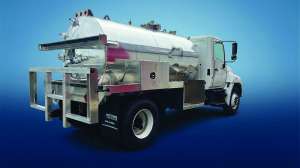
First, obviously, you need a tank. It needs to be made of the proper materials — carbon steel, stainless steel or aluminum — and it needs to be made thick enough to withstand the forces of vacuum and pressure.
Second, the tank should be sized to fit the truck’s load capacity. Don’t put a tank that’s too large on a small truck. And vice versa, don’t undersize your tank in order to spare the truck.
There are guidelines based on weight that will help you choose the most efficient tank for your chassis.
Most manufacturers will tell you what your tank and the rest of the body will weigh when full. Add the weight of the truck to that weight, and see how close it comes to the Gross Vehicle Weight, or GVW, of the truck. If you decide that you’ll be running with a load that exceeds your GVW, then you can start shopping for another truck chassis. That’s the reason trucks are rated for their load.
Some vacuum truck buyers think they know better than Ford, Freightliner, Chevy and International and they are forever shopping trucks. And just a side note, they are usually complaining that the last truck they had wasn’t built right and they’ll never buy another one of those again. So they go to another brand, and overload it. I wish I could say I was joking about this, but I’ve seen it over and over.
The truck’s vacuum pump should be sized to suit the tank. A lot of vacuum pump myths are still circulating in the industry. Some PROs think the bigger the pump, the more powerful the pump, so why not get a monster pump and let her rip? One of the first things to remember when it comes to vacuum pumps is that any size pump will create a vacuum inside the tank.
That’s right. Any vacuum pump will do the job, so what’s the difference between small vacuum pumps and large vacuum pumps? The small vacuum pump will simply take longer to evacuate the tank and create the vacuum you need to do the job. The extra time required to evacuate the tank will eventually shorten the life of the pump. The large vacuum pump will evacuate the tank quickly, but will cost you a good deal more money.
This business is about time and money. Vacuum pumps are built and designed in various sizes so that the pump you choose will be the most efficient by cost and functionality.
***
Next month, we’ll continue to answer Hal’s question by examining the accessories available for vacuum trucks and decide which of those we must have in order to have an efficient and economical rig.
Continue reading for free