QUESTION:
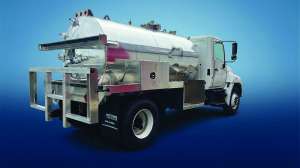
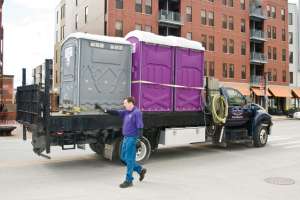
No doubt you’ve heard of the massive fires burning in Arizona. I’m in northern Arizona, 50 miles from Flagstaff, helping support the firefighters by pumping out restrooms and temporary showers. My problem is that my pump starts to overheat. It just doesn’t seem to be working that long and the pump starts smoking. That’s the first issue.
The second issue concerns the oil in my pump. I’m using a Masport water-cooled pump and running short on oil. With the fires burning, I don’t have time to run to Flagstaff and find the proper turbine oil. I’m wondering about a good second choice of oil. My cousin tells me 30-weight will work and my uncle tells me ATF (automatic transmission fluid) will work. Who’s right?
Barry Gladstone
Bouse, Ariz.
ANSWER:
These are two great questions. Often a situation will create environments or circumstances that require changing our normal way of operating. You have certainly come up with both a flaming environment as well as some changing circumstances. No doubt things are already running hot, but to run your pump at an altitude of 7,000 and 7,500 feet above sea level makes a big difference in how it operates and how quickly it overheats.
Let’s take a quick look at the science behind creating vacuum in the higher elevation. At sea level, flipping on a vacuum pump and pulling the air out of a vacuum tank happens relatively quickly. The air is relatively “thick” with molecules and you are trying to create a difference in the number of molecules inside the tank compared to that of the normal air outside the tank. As you withdraw air from the tank, there are fewer molecules in the tank than in the outside air. To obtain a perfect vacuum you would have no molecules in the tank (don’t try it).
All you want to do is create the imbalance between the outside air and the air inside the tank. Once the imbalance is created, you open a valve and what happens? Everything near that valve wants to rush into the tank. That is the essence of how vacuum works. The vacuum gauge on your truck, which measures inches of mercury, is actually telling you the amount of the imbalance inside the tank compared with the normal outside air.
TO THE MOUNTAINS
When you move into the higher elevations, the air is thinner; that is to say, there are not as many molecules when compared to the molecules at sea level. So the problem you’re having is that to create vacuum, you must run the pump longer to build a big enough differential between the “thin’’ outside air and the air inside the tank. Consequently, by the time you’ve built vacuum and pumped some restrooms and showers, it is no surprise the pump is getting hotter and possibly smoking. It’s running longer and working harder than under ideal conditions.
That is one of the primary reasons for using a water-cooled pump. A typical air-cooled pump will heat up much faster in the higher altitudes versus the water-cooled pump.
So for Part 2 of your question, undoubtedly the hot-running pump needs more oil for proper lubrication. You are working far away from the right kind of oil and you don’t have time to track it down. In this case, you have a Masport pump, which as you know, requires turbine oil. Your cousin says one thing and your uncle says another.
Before you take the advice of either one of these guys – or even me – call Masport. Find out from the pump manufacturer if a substitute oil can be used without voiding your warranty or damaging your pump. And this advice is not just for Masport, but for any manufacturer’s pump. Check with the manufacturer before you try something different from original recommendations. Explain your situation and listen to what they have to say. That is why I cannot give you a solid answer. Check with Masport. If you try other types of oil, it’s possible bad things can happen.
Continue reading for free