QUESTION:
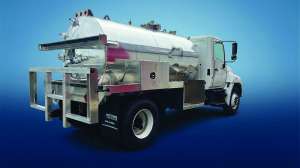
My small company has three restroom service trucks. The recession has really brought a slowdown on business. It used to be that we could barely keep up with demand, but in recent months we’ve had trucks sitting, maybe running one truck, sometimes two. Then the other day we got some calls, and it was time to do some pumping. We were happy that all three trucks would be on the road making money.
The trucks headed in different directions. One truck got to the work site, which was 35 miles from the shop. The driver got everything set up, but there was no vacuum on the gauge. The pump was running, but there was no vacuum being measured at the gauge. He checked the hose and there was no vacuum there either. Still the pump was running. Anyway, our “great” day required another truck being sent out to do the job.
By the way, we have always been in the habit of cleaning the primary and the secondary as recommended. So what do you think the problem was?
Gary Gerard
St. Paul, Minn.
ANSWER:
This is a great question because we’ve seen cases like this in our shop. The recession has left many trucks sitting for long stretches of time. And most service technicians do check and clean their primaries and secondaries, thus avoiding any problems the following day when trucks rev up again.
We’ve mentioned many times that if you don’t clean your primary from time to time and your secondary every day, you’ll have problems. One other element needs to be brought into the equation to solve your problem. Let’s talk about the pre-filter; some people call it the final filter.
The pre-filter is the final safety accessory to prevent debris and materials from entering the pump. In the typical vacuum system, the primary is the first source of protection. As the system runs, some stuff makes it past the primary and is sucked into the secondary where hopefully it drops and is trapped before moving onward toward the pump. But since we are not living in a perfect world, some debris continues toward the pump. This is where the pre-filter comes in.
Some manufacturers have the pre-filter already attached to the pump. It serves as the final obstacle keeping debris from entering the pump. Other pump manufacturers offer it as an optional accessory. It looks much like a mini-secondary.
A WHOLE LOT OF SHAKIN’
In your case, one of two things most likely occurred. As the truck sat for a few days or a week, the leftover waste materials dried and hardened and attached to the interior of the primary and/or secondary and possibly the pre-filter. Then, the vibration of bouncing for 35 miles to the job caused the dried debris to flake off and move along. When your employee turned on the pump, this material collected at the pre-filter and blocked your airflow.
When trucks are running every day, the system tends to take care of itself in this regard. But with more trucks sitting in this stressed economy, things like this will happen.
The lesson is clear: Check that pre-filter. It usually has a removable top attached by wing nuts and can be checked quickly and easily. The other half of the lesson is that when trucks have been sitting for any amount of extended time, beyond what is considered normal, check for proper operation at the shop before you head out to pump.
And don’t stop at your vacuum system, also check the engine oil and other fluids. It might be a good idea to check your tire pressure and the condition of your hoses at the same time.
Continue reading for free