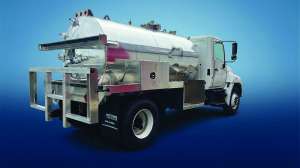
Over the past few months, we’ve received letters concerning the best way to unload a tank. Some PROs are frustrated that either they can’t empty the tank completely or when they do almost succeed, there can be an incredible mess. So rather than addressing several similar questions, we’ll simply talk about the most effective procedures for dumping.
Many technicians dump using gravity with a 3-inch hose, but find a lot of debris gets stuck on the bottom of the tank and plugs the 3-inch dump valve. To offload the clogging items (diapers, plastic bags and paper towels, for example) the technician may use a garden hose in the outlet or any open fitting that is available. Increased water flow inside the tank helps break the debris free and empties the tank. The basic unloading goes by relatively quickly, but the final cleaning and unclogging slows down the process.
Some procedures can be considered to complete the final rinsing process more efficiently and with less mess. The route-runner now may have to climb onto the truck bed to get out of the way of the flowing waste. Then care has to be taken to insert the garden hose for washout.
Here are some alternatives:
1. Replace the 3-inch outlet on the rear head with a larger fitting. Install a 4-inch outlet and use a 4-inch dump hose. When the fitting is replaced, make sure it is flush with the floor of the tank and tilted downward. In many vacuum trucks, the outlet is located above the floor of the tank so things frequently get hung up. The 4-inch valve is more expensive, but time lost coaxing waste out of the tank can add up. Remember, having to play with that silly garden hose for every dumping chews up time and adds to the risk of wearing some of the stuff home. And it doesn’t help to be inefficient at a time when the competition is dumping and running back for more.
2. Another way to empty the truck is to locate a fitting on the side of the tank. If a coupling is installed with a plug or a cap that is easily reachable from the side, then water could be added without having to push and pull on a hose. This would save some time, but it also runs the risk of not getting the bigger stuff out of the tank. Garden hose water pressure is not the greatest force to empty tanks, but this would at least help.
When it comes to dumping, it is also good to have tanks built with a slight slope front to back to encourage more efficient draining. When your tanks are built, make sure that outlet is flush with the floor of the tank.
3. One can use the pressure of the vacuum pump if the pump comes with a four-way valve. Unloading with pressure is just the opposite of sucking up with vacuum. Switch your four-way valve to pressure, let the pressure build up and then with everything in place, open your outlet valve. Pressure will force the waste out, cutting your offloading time considerably.
IN CLOSING
PROs sometimes forget efficient dumping is part of gaining a competitive edge in the marketplace. So many times we accept these chores and forget to look for ways to save time and increase profitability. Obviously, the object of the game isn’t how long you can spend on the job dumping. Get it done, collect what’s due and move on.
Continue reading for free