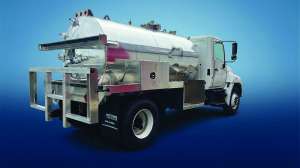
Every year we receive quite a few letters as winter approaches asking how to prepare our trucks. It's always a good topic for a refresher, so let's get started. We never know whether it will be the warmest winter on record or the coldest. You need to be prepared for the worst so your vacuum trucks can keep making profits no matter the weather. So, ultimately, the question is how do we winterize our trucks?
If you live in a northern region, or even approaching the Mid-South, where freezing temperatures can be an infrequent issue, you need to pay close attention to winterization techniques. A number of components on your trucks will be affected by cold, freezing weather. Let's take a look at them and make sure we've got them covered.
Radiator
The radiator is an obvious place to start. We're going to need some antifreeze to keep the power systems from freezing. The expected low winter temperatures in your area will dictate the antifreeze-water mix that will protect your radiator or – worse yet – your engine block from catastrophic freezing damage due to expansion. In some cases, you'll use 100 percent antifreeze. Follow directions carefully to minimize problems. If you want to end your day of winter pumping in a hurry, try waking up to a frozen radiator.
Tires
Snow and/or ice are the greatest compromise to inadequate tires holding the road. If you expect the worst conditions, you'll need to switch to winter or snow tires. And if your state allows it and it's customary to use them, keep a set of tire chains in one of the on-board tool boxes. More importantly, know how to put them on your tires. I spent one of the most frustrating days of my life trying to figure out how to install chains in the middle of a snowstorm.
Remember, on older trucks, if you should begin to slide on a snow- or ice-covered road, don't slam on the brakes. You'll only lose control. Pump the brakes and you'll have a better chance of maintaining control. The newer trucks have anti-lock brakes.
Check the air pressure frequently. When it's cold outside, a driver tends to stay in the cab where it's warm. Take a chilly moment and make sure the tires you're riding on have the appropriate tire pressure and that you have the right type of tires on the truck.
Valves
Ball valves and knife gate valves can freeze in cold weather. There's nothing like trying to open a valve to get the job started and it won't move. If you have heated valves or need heated valves, now is the time to get them in place and operational. There are several different types and brands of heated valves. They are often connected through the electrical system of the truck. Before the weather turns on you, make sure these valves are working properly. Don't forget and don't put it off.
Cab heater
Your job will be much more tolerable if the heater in the cab is in good working condition. It's tough enough working in chilly, frozen weather, so warm up the cab. Don't forget your gloves and the appropriate footwear to make the workday more tolerable.
BE CAREFUL OUT THERE
Even as winter shifts to spring and summer, it shouldn't take long to become accustomed to the changes you need to make in the operation of your truck. Weather can change dramatically and quickly, and you need to be ready to deal with the worst conditions and keep working.
As I have said more than once, the more you understand the parts and the operation of your truck, the better off you'll be in the long run. We're talking about a truck with a longer life and a bottom line that keeps getting stronger and stronger. If it's your truck, you'll be taking home more money, and if you're working for someone else, management will notice where the profit is coming from. That could well lead to a pay raise and a pat on the back.
Continue reading for free