QUESTION: How would you compare pumping and operating a pump truck in a warm climate compared to up north in Minnesota? For example, how long should I expect my vacuum tanks to last? And please talk about business practices in general in the north.
Ron Davis, Morris, Minn.
ANSWER: Obviously, the variation in climates makes a big difference in how you do business. I have been to Minnesota many times. I am familiar with all the lakes and all the mosquitoes. Hopefully, the bug problem is less than it was when I’ve been there. As for pumping, you have a unique job to do November through April.
You have to deal with freezing temperatures, frozen roads, locked-up valves and customers who need your service desperately. As you know, the average Minnesota summer temperature is about 75 degrees. Nice. In winter, however, January averages 7 degrees and warms gradually until April, when the average mercury jumps to 37. Still cold.
Viscosity is the oil’s resistance to flow as measured by a viscometer. The thicker (higher viscosity) the oil, the slower it will flow.
The lower the viscosity, the more wear and tear on the engine parts. That is why using the recommended viscosity oil is important. It protects in both hot and cold startups. Additives in the oil prevent it from thinning too much when heated. The additives also prevent oil from becoming completely useless in cold weather.
A lot of science is involved in viscosity. When it comes to your truck’s engine oil, consult certified mechanics or people you know and trust for accurate information. As for the oil in your vacuum pump, trust the manufacturer’s recommendations. All vacuum pumps are not the same, and they don’t require the same type of oils. I can’t tell you what oil to use in your truck, but the bottom line is: The oil you use in summer is likely not the same oil you use in winter.
Being in Minnesota, you face a lot more challenges than the guy pumping in Florida or Phoenix. Your operating costs are higher. I haven’t checked, but it makes sense that the pumper in Minnesota charges more for services than the pumper in more temperate climates.
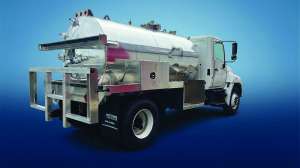
After you’ve chosen the correct oils for your engine and pump, let’s turn to vacuum tank maintenance. The bitter cold temperatures and various chemicals put on the roads in winter can cause exterior damage to a steel vacuum tank. Those conditions can also lead to corrosion on the underside of the truck chassis. If ever there was a good situation for a stainless steel tank, Minnesota is it. Corrosion can really ruin a pumper’s truck and a stainless steel tank will short-circuit some of those issues.
FAREWELL
The journey of life takes us to many places. Some are planned and others just happen. I have been incredibly fortunate in life to have owned a business and taught school from the middle school level all the way through college. I’ve lived through some death-defying accidents, and I’ve made a lot of mistakes along the way.
On my journey, I’ve met some of the finest people, including readers of PRO.
Now life is taking me on to other adventures, and I won’t have the time to keep writing this column. I hope somewhere along the way, one or more of these articles have helped you in operating your pump truck.
My final message is the same as the first: Get to know your equipment and how it operates best. I have often told my kids, “You can’t know too much.” So keep on learning, and more important, keep on pumping!
Continue reading for free