
I track PROs in the news through automatic internet searches. Sometimes the daily dispatches cover a positive story about a company that’s growing and serving its community through charitable efforts. Sometimes stories bring light to a trend in the industry that can help contractors provide better service to their customers. An occasional review of some of these headline stories is good idea, so here we go:
Have you encountered tragedy in your restrooms?
The opioid epidemic intensifying across the country has impacted the portable sanitation industry in an unexpected and disturbing way. There have been numerous news reports of the bodies of overdose victims discovered in portable restrooms. And much like the epidemic of dangerous drugs in America, these discoveries are being made in big cities and small communities alike.
In a recent report out of Jersey City, New Jersey, city employees discovered the body of a 26-year-old man in a portable restroom in the city’s biggest park, which doesn’t have permanent bathroom facilities. Presumably drug users find restrooms a convenient place to find some privacy to administer fatal doses of heroin.
Have you encountered evidence of drug usage in your units? I’ve heard it’s not unusual to find needles when pumping restroom holding tanks, which would greatly increase the danger of your job. Imagine the prospect of getting stuck by a sharp needle when separating trash from the tank or finding a used needle on the floor or outside the restroom during service. PROs must remain vigilant in looking out for these dangers whenever they stop for a service, especially in more public settings like a park.
These additional risks in the workday and the trauma of such a discovery add to the stresses faced by restroom cleaning crews. And beyond that, many of you have probably been touched by the addiction crisis by knowing someone who has fallen to a drug overdose or know of a family touched by this type of tragedy. The federal Centers for Disease Control and Prevention reports that more than 42,000 people died of opioid overdoses in 2016, five times the number in 1999.
The numbers are startling. Many Americans are stepping up and supporting efforts to fight this terrible trend. If you or your company are involved in the war against opioid drug abuse, I’d like to hear about it and share your stories with readers. Contact me at editor@promonthly.com.
Tie them down before you move them out.
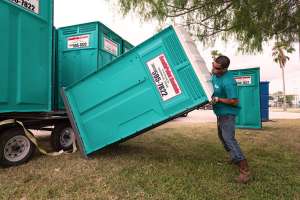
A recent story in The Republican Journal of Belfast, Maine, offers PROs a good reminder about safely carrying loads of restroom for the next delivery. According to local police, a restroom carrier strap snapped in heavy crosswinds, sending a unit airborne and into the windshield of a passing vehicle. The flying restroom caused $4,000 in damage to a vehicle, but thankfully nobody was injured.
Whether it’s equipment failure or human error, take some time during this busy season to check your loads before you head out to avoid tragedy. First, make sure your tie-down straps are in good shape. If they’ve been in use for a few years, consider swapping them all out and starting fresh. If they’re fairly new, inspect them for fraying, cuts, stretching, or other damage and replace as needed. Check the hardware to make sure it’s still latching properly for a snug fit.
If the equipment is up to standard, gather the crew and review your load security procedures. Make sure everyone from the seasoned veteran technician to the summer helpers are following best practices. If you don’t have established best practices written down, put writing a safety policy manual on your to-do list for the off-season. Everyone is busy, and restrooms are clumsy cargo. Make sure you’re doing all you can to protect fellow motorists and your equipment when moving down the highway.
Be careful when you conceal and carry.
The next time you carry your Glock 23 .40-caliber handgun to your kid’s soccer tournament, may I suggest you bring along a secure holster to keep it in? According to a news account, a 64-year-old grandfather used a portable restroom adjacent to the Merrill Soccer Fields and children’s playground in Hamburg, Michigan, and put his loaded handgun on the purse shelf, presumably so it wouldn’t accidentally fall into the toilet holding tank. The problem is that he forgot the gun and left the park, leaving it to be found later by another person using the restroom. The gun was later returned to its owner, who is licensed to carry a concealed pistol. Local county prosecutors were reviewing a police report to determine if any gun laws were broken.
How do you recycle, reuse your old restrooms?
This just in from the website www.communitychickens.com: Turn your worn-out restrooms into “poop coops.” John L’Heureux of Litchfield, New Hampshire, posted photos and a story about his new backyard chicken coop using the shell of an out-of-service handicap restroom.
A relative of L’Heureux works for a portable restroom company and got him the unit destined to be crushed, recycled or sent to the landfill. He installed a roost and two nesting boxes inside the unit and cut a doorway in one panel so his five chickens could access an 8-by-8-foot wire run.
What cool ways have you found to repurpose restrooms you take out of service? I’ve heard they make great hunting blinds and sheds to house lawn and garden tools. Send your ideas and photos of recycled restrooms and I’ll share them in a future issue.
The next time a running event wants to skimp on units …
Tell them about “runner’s diarrhea,” also referred to as “runner’s trots,” the uncontrollable urge to go among some runners’ poor race-day preparation or the relentless jarring action from jogging. Writer Matt Gray outlined the phenomenon in a recent story posted at www.nj.com.
In the story, runner Ben Teixeira, president of the Clifton Road Runners Club, says that when he started running, he was shocked to see people leave racecourses to defecate in the woods or, worse yet, not even slow their stride when nature calls.
“I’ve seen races where runners get to the finish line and their legs are completely drenched,” he explains.
An expert recommended runners avoid eating too close to race time and avoid greasy foods while preparing to run.
As a restroom contractor, you can do your part by suggesting more units spaced out along running routes to help runners cope with these emergency situations. The cost of a dozen additional restrooms is a small price to pay if race organizers can avoid the bad publicity of runners heading for the bushes and dropping their shorts.
The story begs the question: What drives folks to run long-distances races anyway?
Continue reading for free