
A lot can happen in an industry over a decade. I looked back at my editor’s column from the January 2011 issue of PRO, where I compared the portable sanitation industry to the late funnyman Rodney Dangerfield. Neither one got any respect.
At the time I was bothered by the way portable restroom operators were depicted in the media. Newspapers and TV news programs were dominated by “potty humor” whenever the industry came up, whether it was a restroom getting knocked over at a construction site or a traffic crash that involved a pump truck.
“Gotta watch out for those ‘lavatory’ retrievers,” someone posted to a newspaper website after a restroom fell off a trailer. “I guess traffic isn’t the only thing that backed up here.”
That was tame. Many of the jokes were in poor taste, demeaning PROs and the work they do.
Flash forward 10 years and I don’t hear quite so much belittling of our industry. In fact, I would say with all the natural disaster responses we’ve seen and the recent COVID-19 pandemic response, PROs are gaining a lot of respect. The general public has come to realize the critical service you and your crews provide when times are tough.
Further, I think folks understand that without your restrooms, many a large event would be impossible. Think about the huge camping music festivals that have become so common in recent years. And major political events, such as presidential inaugurations. With many service innovations, PROs have learned to provide quality sanitation for these events.
PROGRESS MADE
This got me to thinking about other developments that have improved the world of portable sanitation in the past 10 years. As we embark on a new year of challenges for the industry, I’d like to reflect on some important changes we’ve lived through. Let me know if you have any other advances to add to my informal list.
There’s a new expectation of cleanliness
The pandemic underscored the importance of thorough service of restroom units, but that train was already headed down the track. Your customers have demanded more from you since 2011, and the expectations were raised with every service improvement you’ve instituted. We talked about respect earlier; and I think you have built an excellent platform of good practices that fostered a growing respect from restroom users. Among those are definitive service protocols for your crews, pushing for use of hand sanitizers and hand-wash sinks, and continuing to offer equipment upgrades to show customers the way to cleaner restrooms.
You’re always on the job today
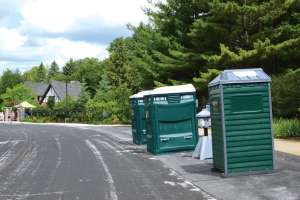
I remember the days when a restroom wasn’t a prerequisite on construction sites. Work crews would waste time driving to a convenience store to use the bathroom or, on residential job sites, ask the homeowner to use the indoor plumbing. Worst-case scenario, a carpenter would head for the nearest bushes for cover and go outside. Thankfully those cases are few and far between today. Health departments now demand restrooms on any work site. At the same time, restrooms have become the norm at small festivals, parties, running races and outdoor weddings. Your service is no longer an afterthought but plays an integral role in the lives of millions of people every day.
You take environmental responsibility seriously
Your continued promotion of environmental stewardship has been a winning message. You have promised to handle infectious human waste using best practices, solving an important problem for construction and event customers. You follow all proper disposal rules and work with wastewater treatment plants to effectively recycle a precious water resource. Many of you have started to take this responsibility a step further by developing your own dewatering plants as municipal treatment plants are overwhelmed and land application opportunities disappear.
You’re looking good
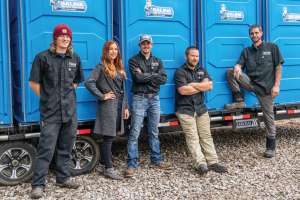
You have dramatically improved the professional appearance of your companies. You send uniformed crews out in the field with updated service vehicles and company policies aimed at raising the bar in service and the industry’s reputation. Marketing has changed dramatically, as phone book advertising has virtually disappeared and websites and social media have allowed you to more effectively target your customers. A decade ago, some PROs were still skeptical of these new ways, but no more. One positive industry image change is taking the bathroom humor off trucks and company logos. Tired old one-liners about being No. 1 in the No. 2 business, etc., are thankfully disappearing. PROs have realized these jokes are no way to build value for portable sanitation.
Technology boosts efficiency
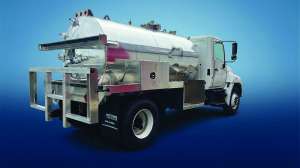
In the past decade, we’ve nearly reached The Jetsons age in small-business technology. GPS routing and mobile communications have greatly improved, providing service efficiencies never before dreamed of. For a very small price, you can track every restroom unit, every trailer, every truck and therefore every driver to boost the profitability of every service stop. Reduced-emissions trucks are more reliable than they once were; tanks and accessories are lighter, sturdier and better. Direct deposit payroll, instant messaging and tablets in every vehicle are helping the industry go paperless. You are doing more with less and hopefully turning that into a revenue booster.
A LOOK AHEAD
What can we expect over the next 10 years? When we look back in 2031, what will we say moved the portable sanitation industry forward? Imagine for a moment the changes you will see. I’ll share a few concepts that may be within reach. Let me know what other predictions you have for this industry that is still maturing and growing.
A new kind of restroom unit
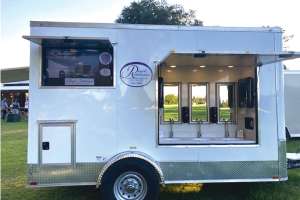
For starters, maybe the U.S. will follow other countries and require all restrooms to flush rather than use the traditional drop tank. What else could change? How about new lightweight and durable materials are developed to create a more rigid structure that can contain more bathroom amenities in the same footprint as a standard restroom? Will these restrooms adapt the features of today’s restroom trailers to improve comfort and versatility? We could see a new type of urban restroom allowing restroom providers to build a new service specialty. Skid-mounted, heavy-duty restrooms could be dropped on busy street corners, fire camps and homeless areas, for example. They could perhaps offer the option of plugging into a power grid and sewer infrastructure to provide unlimited service without pumping.
Smart trucks/zero-emissions vehicles
The advent of self-driving vehicles may dramatically change the way portable sanitation companies and other service-based businesses work. With this technology, PROs could program all stops on a service route and allow ride-along technicians to perform other administrative tasks between stops. Robotic cleaning devices may be deployed to change the role of technicians or allow more service calls on every daily route. Currently the first all-electric work trucks are being tested. If trucks have the torque to handle heavy liquid loads, they could greatly reduce necessary maintenance of your fleet and fuel costs, as well as enhance your message of environmental stewardship.
Waste-to-water disposal
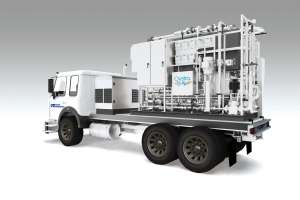
A great deal of research and development effort is currently being put into compact wastewater processing equipment. Last year I had the opportunity to see a new unit in action that quickly converted septic tank waste into clear, pathogen-free water. Engineers on that project told me we were not far off from these units producing tap water. So if PROs choose to, in the not-too-distant future they could fully take over responsibility for wastewater treatment. Maybe the units will be the size of a small trash container, like the one I saw, installed in the restroom company’s yard. How long until they will be reduced to the size of a vacuum tank that can recycle water during a service route? At the very least, the technology is here today for small-scale dewatering that could make PROs less reliant on overburdened municipal plants.
Continue reading for free