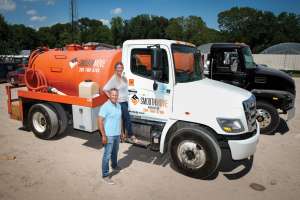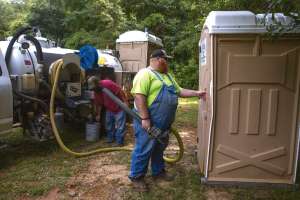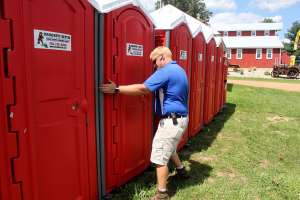

To the casual observer, dropping off portable restrooms at a job site may seem like an elementary part of the daily routine for your drivers. But nothing could be farther from the truth. The general public appreciates when service providers find just the right spot for a unit. But on the flip side, a drop-and-run scenario can lead to all sorts of problems. Fail to consider the best location for a restroom and you face the potential for costly callbacks, financial battles with customers and worse.
Take these recent situations, for example:
THEFT PREVENTION EFFORTS
In recent stories out of the Fort Myers/Cape Coral metro area of Florida, restrooms were reported stolen from construction sites. These incidents can be costly for portable sanitation companies who lose product and customers who are often responsible for replacement of stolen units.
According to NBC-2.com, restroom thefts are on the rise and a prominent PRO, Jennifer Corrigan, of JW Craft Portable Restrooms, told the news outlet it’s probably because the units are rising in cost like everything else. “Someone must have gotten a wild hare and decided to get into the business or the manufacturers aren’t manufacturing quick enough,” Corrigan explained.
One theft from a home construction site was caught on a neighbor’s doorbell camera, leading to recovery of the unit nearby. In the video shown on the television news, someone picks up the unit using a front-end loader and drives off. In an area busy with construction, moving a restroom to another location might not raise suspicion, one neighbor said.
That neighbor, Steve Mammen, tracked down the restroom on an empty lot a block away. He explained the theft this way: “They didn’t have a port-a-potty, so they couldn’t get an inspection without the port-a-potty. So they just come by and nab this one.” In this instance, the service provider recovered the unit, but others are not always so lucky.
Here are a few ideas to reduce losses due to theft:
• Add GPS trackers. Corrigan said JW Craft is considering adding GPS tags to the restroom inventory. The cost of tracking technology has come down over the years and would be considered minimal compared to the loss of stolen equipment. This goes for restrooms, hand-wash stations, trailers, vehicles, basically anything you take out in the field.
• Take advantage of surveillance. If a unit is stolen, keep in mind that many homes and businesses now use doorbell cameras or other security systems that might help you find out who stole your restroom. As a matter of routine, the police canvass neighborhoods to find video evidence when a crime is reported. You could also install your own trail cameras, particularly when placing expensive equipment in a remote location where theft and vandalism might be anticipated.
• Consider other potential deterrents. Place construction units away from the street (as long as you can still access them for service and pickup). In the Florida theft caught on camera, it took mere seconds for the thief to slip his pallet forks under the roadside unit’s skids and take off. You could also stake down construction units, fence them in and lock them down when not in use. Motion sensor lights and alarms could also discourage would-be thieves in the middle of the night.
• Stress the customer’s responsibility. A key way to protect your property on a work site is to hold the customer responsible for damage or theft that occurs when equipment is under their watch. That goes just as much for the construction worker who drills holes in the unit when he’s taking a relief break or when vandals strike in the middle of the night. If they are reminded of the costs they will face, contractors will keep a closer eye on security and damage caused by their employees.
BLOCKING A LAKEFRONT TRAIL
A portion of the general public irrationally hates the sight of a portable restroom, even when they are providing a valuable service in a downtown area, a park or other busy public area. Why make it worse by giving them another reason to complain? That’s exactly what happened a few months back when restrooms were placed at Oak Street Beach in Chicago for the annual Air and Water Show.
According to a report by www.bookclubchicago.org, restrooms were placed along the bike lanes on the Lakefront Trail, posing a safety hazard for restroom users and passing cyclists. A local Segway tour guide, Mike Perrino, complained that the placement would lead to collisions between people exiting the restrooms and passing cyclists.
When he saw the row of restrooms, Perrino’s first response was, “Wow, this is stupid, this is horrible. Why would they put a door zone in the only place that’s supposed to be safe to ride a bike? You could easily put those in the grass between the trail and the drive.”
Several park users were happy to see the restrooms that provide necessary relief to crowds that use the busy parkway. But they said more thought should have been given to where the units were dropped.
“Thank God I haven’t seen anyone get doored, but it’s just a matter of time. It’s not a trail that’s just for experienced riders,” said cyclist Rick Rosales.
This is a good reminder to consider potential dangers at every new restroom location. And also to think about the convenience of users. Talk to your customers and carefully survey the areas where they want the restrooms placed. Establish your logistics expertise when it comes to portable sanitation and confidently push back if you know their placement ideas are flawed. Remember that your reputation is on the line and your name is on the restroom door if something goes wrong.
TRIPPING LAWSUIT
A nightmare for any PRO is the prospect of facing a lawsuit, and having to hire a lawyer and show up in court to defend your company against the claim. In today’s society, many disputes quickly migrate down this costly and time-consuming path. Such is a recent case in which a Galveston, Texas, woman is suing a restroom contractor for negligence for allegedly creating a tripping hazard through its placement of a restroom at a construction site.
According to www.setexasrecord.com, Lashaila Benson was injured when she used a restroom at the Galveston Seawall. She claims that she fell while exiting the restroom. The lawsuit says the unit was placed in a way that created an uneven ledge and that the PRO involved failed to properly place and maintain the unit or adequately train or supervise its employees to avoid a hazardous situation. The claim says the PRO should have known the placement was dangerous and posed an unreasonable risk of harm.
Benson says she suffered impairment, disfigurement, lost wages and medical and pharmaceutical expenses due to the fall. She is seeking $75,000 to $250,000 in the lawsuit.
KEEP AN EAGLE EYE
The portable sanitation business isn’t just about landing that next big client and providing superior service … though these are keys to a successful operation. You have to pay attention to the details to prevent theft or avoid catastrophe. Risks are waiting around every corner, so capable restroom contractors will pay close attention to how proper placement of units will ensure you have a good day, week and year on the job.
Continue reading for free