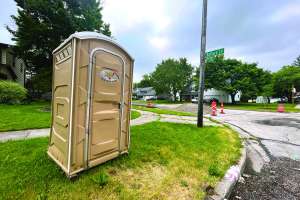

A portable restroom was dropped around the corner from my house a few weeks ago to serve the construction crew replacing sewer infrastructure and resurfacing and streets in my neighborhood. Whenever I walk the dog past the restroom, I am reminded of the occasional news story I see about homeowners who are offended by living with long-term restroom placements nearby.
Of course, this doesn’t offend me at all. I think it’s silly to complain about something that could be considered every bit as critical to a construction project as the excavator parked in front of my house or the new sewer pipes temporarily stacked on my neighbor’s sidewalk right-of-way. I see a PRO providing a valuable service that offers dignity to workers and saves them time away from the work site looking for relief.
As long as it is serviced regularly and doesn’t become a target of vandals, I’m fine with that restroom staying on the corner as long as it is deemed necessary. I think we all have many other more important issues to be concerned about. But that’s me, and apparently not everyone shares my view of portable sanitation.
CHANGING TIMES
Coming up on my 20th anniversary as editor of PRO, I have watched the popularity of portable restrooms explode at both construction sites and special events.
Construction crews have become accustomed to having a restroom on site for everything from large hospital building projects to the smallest residential home remodel. Giant banks of restrooms have played an integral role in the growth of outdoor festivals, camping events and concerts. Folks sometimes complain about using them, but without portable sanitation, events like Coachella, Burning Man and NASCAR race weekends would descend into chaos if they could happen at all.
As the number of applications and the demand for portable restrooms grew, local government regulation over their usage has really been minimal. But that is starting to change, and occasionally now we see some guardrails being added to dictate how units are placed, when they are serviced and how long they can remain on a site.
Earlier this year, I explained how the city council in Albany, Oregon, was grappling with complaints from residents about a restroom located at a church to serve homeless people who were sleeping in their vehicles nearby. Despite neighbor complaints, the city ultimately decided to allow long-term portable restrooms with no permit required.
Now comes a community in New Jersey, Piscataway, which is poised to give final approval to an ordinance setting rules about portable restroom placement. In a story from MSN, the city’s mayor, Brian Wahler, explained what precipitated the new rules: “There are some homeowners who have … portable toilets in their backyards all year round. Most people understand that when you have a special event, they get removed soon afterward. But some people are keeping them outside all year-round.”
SETTING LIMITS
I suppose there are situations where homeowners would want to keep a long-term portable restroom. For example, perhaps they have a lot of visitors or the home is a neighborhood congregation spot for kids, and the restroom relieves pressure on a septic system. Or maybe they have a backyard pool and want to keep soaking wet swimmers from coming in the house to use the bathroom. Whatever the case, neighbors complained about the restrooms, resulting in these new regulations published in an ordinance:
A portable toilet shall be allowed only for temporary use. Portable toilets must be removed upon expiration of the event or the construction permit. No portable toilet shall remain on private property for a period greater than six months unless approved by the appropriate municipal official.
No person shall leave a temporary portable toilet on or along any municipal roadway or municipal property unless expressly authorized by the construction official. The toilet shall be wholly confined to the property where the construction or repair work is occurring.
All portable toilets are required to comply with the following setbacks: Minimum front, rear or side setback of 10 feet; minimum setback of 20 feet from any public or private roadway; minimum setback from any commercial food service operation of 100 feet.
Portable toilets shall have watertight, completely closed tanks for storage of waste, shall be flyproof, shall be adequately vented and shall be provided with cleanable seats and hand sanitizer.
No person shall maintain a portable toilet which creates a nuisance as a result of overflow, lack of absorption or faulty design or construction. All portable toilets shall be maintained in a clean and sanitary condition at all times.
I have a couple of observations about these regulations. First, this will likely eliminate the more permanent restrooms that drew complaints. Second, the setback requirements might not be realistic at many construction sites, especially homebuilding projects. PROs and contractors often prefer to place units near a roadway for convenient servicing and to keep them out of the way of equipment and workers on smaller lots.
And the regulations could be interpreted to prohibit the use of drop tanks, which remain the standard for construction sites and most large-scale events. They call for “watertight, completely closed” holding tanks, which would seem to indicate flushing units only. They also require hand sanitizers, which should probably be a minimum sanitation feature anyway.
THE FROZEN TUNDRA
A similar situation hits closer to home for me — about 4 miles away from my Wisconsin home in the neighborhoods surrounding Lambeau Field, where the Green Bay Packers play. The NFL’s most historic stadium is surrounded on three sides by the village of Ashwaubenon, including some commercial and residential areas where portable restrooms are a game-day staple.
Many homeowners and small-business owners turn their properties into parking lots every football season to accommodate 80,000 fans who descend on the city for games. Almost every square foot of front yards are filled with cars; however, some of these opportunistic neighbors save a little room for a portable restroom. And these restrooms that pop up from August into January can create an issue with neighbors.
“Each time there’s a game, there’s a different issue. Sometimes it’s location, sometimes it’s smell, overall sanitary conditions,” Aaron Schuette, the village’s community development director, told WLUK Fox 11 in a news story. So the village wrote restrictions on the use of portable restrooms for construction sites and at Packers game, approving the following:
For construction: Portable toilets shall be used only during active construction activities and secured or locked at all other times. Portable toilets shall be cleaned and serviced a minimum of once a week.
For Lambeau Field events: A portable toilet shall not be located within any zoning setback or public right-of-way. A portable toilet shall not be placed more than 36 hours prior to the start of an event and shall be removed not more than 36 hours after the start of an event. When Lambeau Field events are planned within seven calendar days of each other, a portable toilet may remain on site provided it is cleaned and serviced within 36 hours of the events.
MORE RULES COMING?
These regulations did not address the features of restrooms as the New Jersey officials did. But I wouldn’t be surprised to see more stringent rules nationwide about cleaning and servicing restrooms, as well as demands for upgraded units in the future. It’s bound to happen as the portable sanitation industry matures and equipment becomes more advanced and sophisticated. It’s also clear that the COVID-19 pandemic played a key role in users demanding better restrooms and services.
PROs should expect to encounter more and more rules in the future. As the use of restrooms continues to rise, so will the concerns about aesthetics and safety of the units. Don’t consider this an impediment to running your business, but a recognition of the growing importance of the equipment and services you provide.
Continue reading for free