QUESTION: Route service technicians are required to have training in our state. Our company is also a strong advocate of ongoing training for all employees. The biggest challenge that we face is scheduling training sessions that do not interfere with our normal business operations. What suggestions do you have for us to manage training schedules and work plans?
ANSWER: Online, on-demand and self-paced training are some of the most underutilized programs in our industry. Among the advantages of these programs are:
- Training can be conducted at the convenience of both your company and your employees. You no longer have to adjust your schedules to those of the training class offerings and make transportation arrangements to and from the training location. Training and certification classes that may have been offered in locations too far away are now available in your office.
- Teaching and instruction procedures are now more consistent because classes are recorded. No longer will one class be taught by a long-term instructor while another is led by someone less experienced.
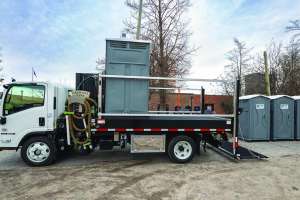
- Visual elements enhance the learning process as compared to simply reading the procedures or viewing them on slides or charts. For example, recorded training can show a person walking around a route service truck and actually conducting a pre- or post-trip inspection. This experience is much closer to a learn-by-doing approach, which makes these training sessions more likely to “stick” in the new technician’s mind.
Here are several examples of existing online training programs that will be of benefit to your company:
PSAI Online Training and Certification Program
Established in 1992, PSAI Certification is approved and meets requirements in multiple state governing agencies. As of this year, both PSAI Training and the Certification Exam are available virtually on-demand and can be completed by individuals at a time and place that fits their busy schedules.
Based on industry standards as set forth by OSHA, ANSI and the DOT and the “best practices,” established by PSAI industry veterans, the PSAI Training Modules include:
- The Basic Service Technician and Training Series – This series of three online classes prepares the student for the online PSAI Certification Exam. These courses are:
- Portable Sanitation: Transportation and Logistics – 1 1/2 hours. This training includes operating vehicles, delivery and pickup of units, and disposal procedures.
- Servicing and Maintaining Portable Sanitation Equipment – 2.0 hours. This module covers proper cleaning procedures in the field and in the yard, pump operation and maintenance, and repair of units.
- Health, Safety and Professional Excellence – 2 1/2 hours. In this module, safety, personal protective equipment and spill procedures are highlighted.
- The PSAI Certification Exam - This exam can be taken with or without completing the three previously listed training courses, is up to 90 minutes in length and can be taken entirely online without the supervision of a human proctor or instructor. An artificial intelligence virtual proctor monitors the student as they take the exam to ensure credibility and fairness.
Successfully passing the exam earns the recipient three years of approved industry certification. After that time, submitting proof of completing at least six hours of professional development in the portable sanitation field, plus a review of the training materials. Particularly, any updates or changes that have occurred since initial certification earn renewal for three additional years with no exam required.
Depending on state requirements, a new route service technician may be required to become certified several weeks after being hired. If so, and if they successfully pass certification, they are classified as a Certified Portable Sanitation Apprentice. After 2,000 hours of field experience, they can apply to be upgraded to Certified Portable Sanitation Professional at no cost.
- Non-Route Service Technician Certificate Program – A new online training offering that is in development where administrative and sales employees view condensed versions of the Route Service Technician Training Classes in order to become familiar with the proper cleaning, servicing and safety procedures. In this way, they can better communicate and assist customers with questions or issues and further improve customer satisfaction. A final exam is not required.
Individual Live Online Training Courses include:
- Portable Sanitation and Special Events – 1 1/2 hours – This course covers customer communication, the proper number of units required at an event, delivery and pickup considerations, and the most likely areas where problems may develop.
- Portable Sanitation and Work Sites – 1 1/2 hours – This program describes various types of job sites along with best practices for each, including ideal unit placement and health and safety requirements.
- Portable Sanitation: Preparing for Extremes – 1 1/2 hours – This training explains and demonstrates considerations and tactics for servicing and maintaining units at temperatures below 32 degrees F, above 85 degrees F and in windy conditions. This course covers planning, risk management and responses for disasters in your service area.
The PSAI offers professional development hours for each of these courses, and most are approved for continuing education units in many states.
The PSAI currently offers all of these on-demand, online and self-paced training courses in English, but is currently looking at translation to other languages.
NAWT Training Courses
- Vacuum Truck Technician Training – This course targets operators of vacuum trucks used to clean septic tanks, holding tanks or grease traps. The topics covered include truck equipment and components, pump truck operation, the science of vacuum and pressurization, basic pumpout skills, loading and unloading, governmental regulations and safety guidelines.
This one-day course is offered at NAWT scheduled locations throughout the country. Train the Trainer is also offered. What is this approach to training?
- Train the Trainer - This innovative approach may be of benefit to PROs who want face-to-face training on-site at their location or at various locations. While not an “online training,” it is national training done on a local level. This concept involves a company representative attending the NAWT training for the topic that they would like to teach. Here, they learn how to properly teach this class to their own employees at their own location. This is an excellent concept if your company has multiple locations and if it is of the size that new employees are hired on a regular basis.
JJ Keller & Associates
Founded in 1953, this nationwide organization provides training and consultation on creating safe work environments. They offer a host of educational and informational products and training available on demand, streaming video and video books.
Research the videos that JJ Keller has for some that may be of benefit to train your employees. We found two worthwhile examples:
- Routes and Route Planning – 7 minutes – Ideas to consider when creating routes. From starting the route from the furthest point from the yard and working your way back to the yard to running routes counter to heavy traffic patterns.
- Tire Check – 7 minutes – Processes and tips on maintaining truck tires. Proper care and inspection can prolong the life of tires, save money and avoid loss of time due to tire blowouts.
Also, a variety of topics that may be unique to your company’s operation include ladder safety, basic forklift operation, among others.
Short videos such as these are excellent training aids, again available online and at the employees’ convenience.
FINAL THOUGHTS
Training is vital to the success of your business. Thanks to technology, gone are the days when training cannot be completed because “we can’t fit it into our workday,” or “the training location is too far away,” or “we can’t send that many people at the same time to a class.” Online training is here and, using the PSAI program as an in-depth example, one can see the quality and quantity of information available. Best of all, this training can be done at any time without the need for a formal classroom setting. NAWT, as an example of Train the Trainer, is another efficient training tool. Finally, JJ Keller’s vast library of information can be another source of valuable information without formal classroom training being required.
Continue reading for free