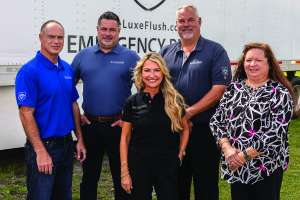
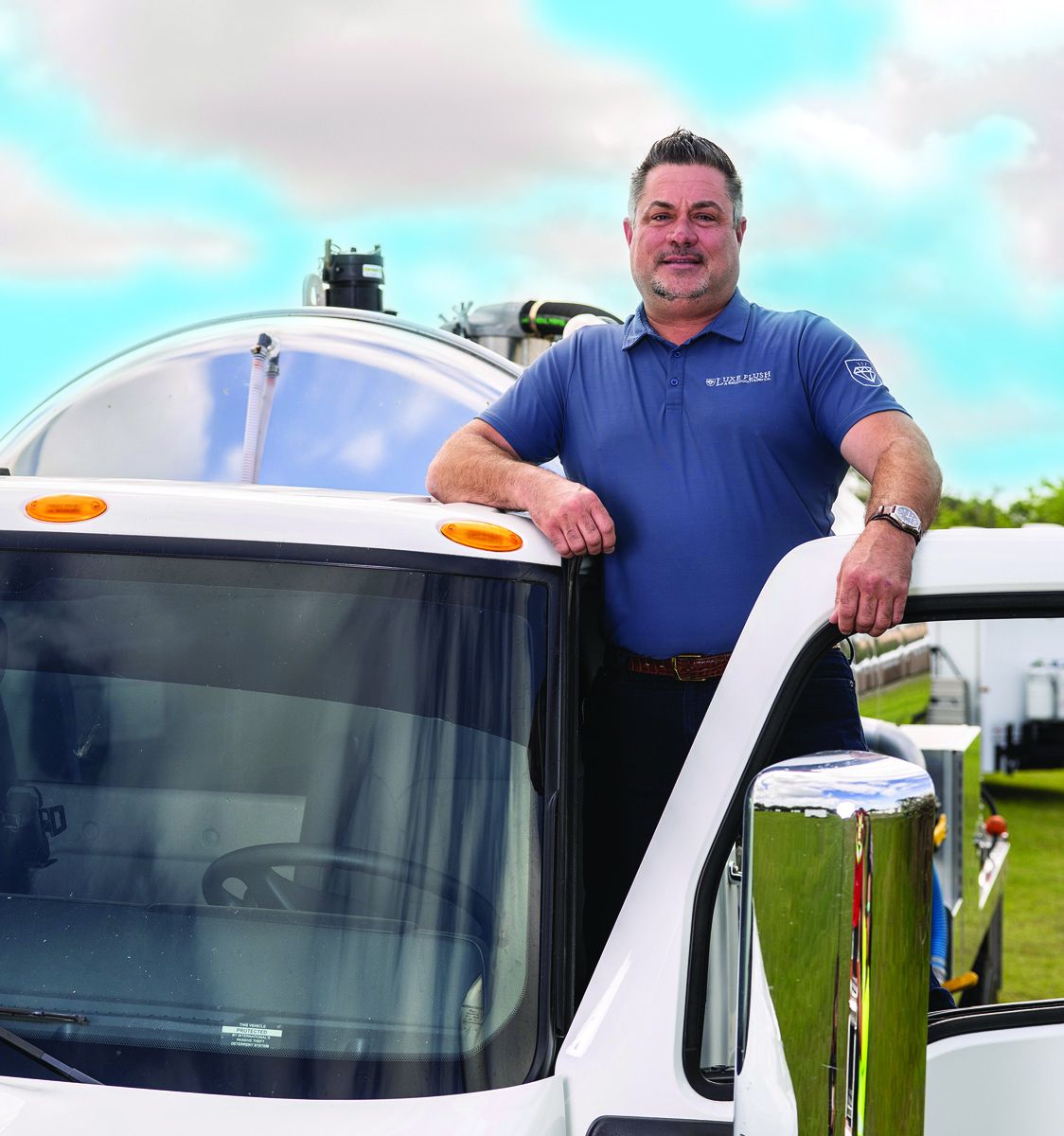
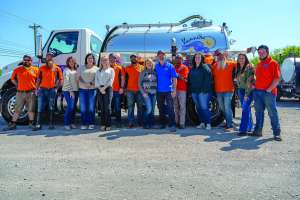
When Randall Moore started a portable sanitation company in January 2020, he hit the ground running. He now has roughly 75 employees, 3,400 portable restrooms, 300-plus trailers (restroom, shower and laundry) and 35 vacuum trucks.
His company, Luxe Flush, is headquartered in Sanford, Florida. He also has five satellite locations around the state (all startups, not acquisitions), as well as a South Carolina yard in development and a property in Louisiana for future use.
The company provides services for events and construction projects but a big part of their work is for disaster relief operations nationwide. “And that’s where it all started,” Moore says.
In 2000 he joined a sanitation company in Atlanta where he ran a service truck. “Then I got my taste of the disaster business in 2005 when Hurricane Katrina hit,” he says. “From then on I stayed in that business doing emergency management.”
In 2010 he acquired a tent company and started renting out tents for events. They were also used for disaster work along with restroom and shower trailers. The company grew, but after a few years Moore had an epiphany.
“I do a lot of driving and thinking,” he says. “And it just hit me one day that I needed to look at opening up a day-to-day operation. I had acquired so much equipment, it just didn’t make sense to be using it only for disasters because it was otherwise just sitting there.” He also had a lot of staff to keep busy.
He sold the tent company and started scoping out the industry to see if his idea made sense. He tried contacting local sanitation contractors, but when he got no response, he had his answer and by 2020, Luxe Flush was in business.
5 UNIQUE THINGS TO KNOW ABOUT LUXE FLUSH:
1. COMPANY ASSETS
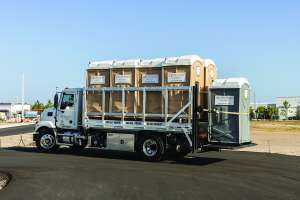
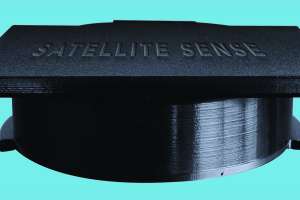
Most of the company’s portable restrooms are the Aspen model from Satellite Industries. Trailers are from JAG Mobile Solutions and Satellite.
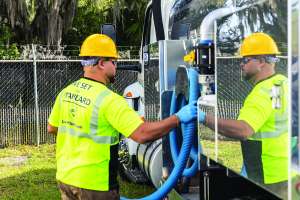
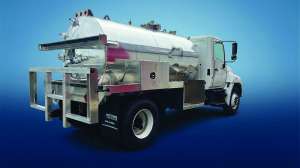
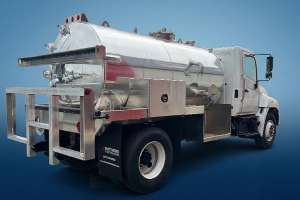
Vacuum trucks (mostly Satellite Vacuum Trucks) are custom-built, and mostly with Mack trucks and Masport pumps. “We have two types,” Moore says. “One has 1,650-gallon waste/500-gallon freshwater tanks used for events. The other has 3,000-gallon waste/1,000-gallon freshwater tanks for events and disaster response.” Vacuum trucks are kept for six years, then sold and replaced.
Trucks are built out with disaster relief work in mind. “But those same trucks work perfectly on the festival side,” Moore says. The company also uses its eight disaster relief potable water trucks for servicing as well as their custom-built skid-mounted water tanks (1,100 to 2,500 gallons).
For transporting equipment, the company has a fleet of semis and dry vans as well as hauling trailers.
2. HANDLING DISASTERS
About 60% of the company’s work is providing sanitation equipment and personnel for disaster relief. When a call comes in, a crew heads out to the site with the necessary equipment which might include portable restrooms, restroom trailers, laundry and shower trailers, generators, potable water as well as vacuum trucks. The equipment might be for work crews or civilians.
Employees on this side of the business must be on call and ready to leave at a moment’s notice for an undetermined length of time, which could be anything from three weeks to six months. Accommodations might be bunkhouses or RVs — not usually hotels that civilians would need.
The people who manage the crews have been with the company a long time. They are prepared 24/7 to respond to a call and are required to have a ready-to-go backpack for each season.
3. SERVICING EVENTS AND CONSTRUCTION PROJECTS
The company calls the event and construction side of the business “blue sky” work, and it has been growing tremendously, Moore says. “We’ve just been pounding really hard, so I think in a year blue sky might account for 70% of our business.”
They not only work on local projects but sometimes travel nationwide for their clientele. “These production companies — their name is on the line,” Moore says. “So they want to have vendors that want to run with them, who they know they can trust, that when you call them at 2 in the morning or if they need something last-minute, it’s no problem.”
Service is the name of the game for Moore, even when he was working for someone else. “I take it to the next level,” he says. “That’s been on everything I’ve done. We have a motto that we set the standard.”
For example, the company operates seven days a week and is on call at all times. An employee answers phone calls 24 hours a day. The company provides event attendants to monitor and clean trailers. They are company employees, not contractors, which Moore believes makes a big difference in quality.
Attendants keep trailers stocked and clean. “And for portable restrooms, we bring an overstock with us,” Moore says. “And we are mopping floors, taking the trash out and replenishing everything.”
While lowballing competitors can be a challenge, Moore says he’s a firm believer in selling based on service, not price.
4. MANAGING EMPLOYEES
The company carefully vets job applicants and picks the best. People are attracted to the opportunity with Luxe, Moore says. “We have a good benefits package, we have a great name and our growth has been so tremendous that people see a future here and want to be a part of it.”
At Luxe, the operations manager does not manage everything. “I think that’s just too much,” Moore says. “We’ve trimmed that down to where we have ‘captains’ managing X amount of drivers. And then our ops manager manages the captains.”
5. CARING FOR THE EQUIPMENT
The company has an organized system for maintaining equipment. Everything in the yard has a specific location. When a restroom trailer comes back from a job it goes through an assembly line process for cleaning, whether it’s been out for three hours or three weeks.
It starts in the “dirty line” then goes to the wash bay for cleaning. The service techs go through a 35-point checklist. If there’s damage they red-tag it and send it to the “damage line” where it’s fixed, then green-tagged and placed in the “ready to rent line.” Portable restrooms go through a similar process.
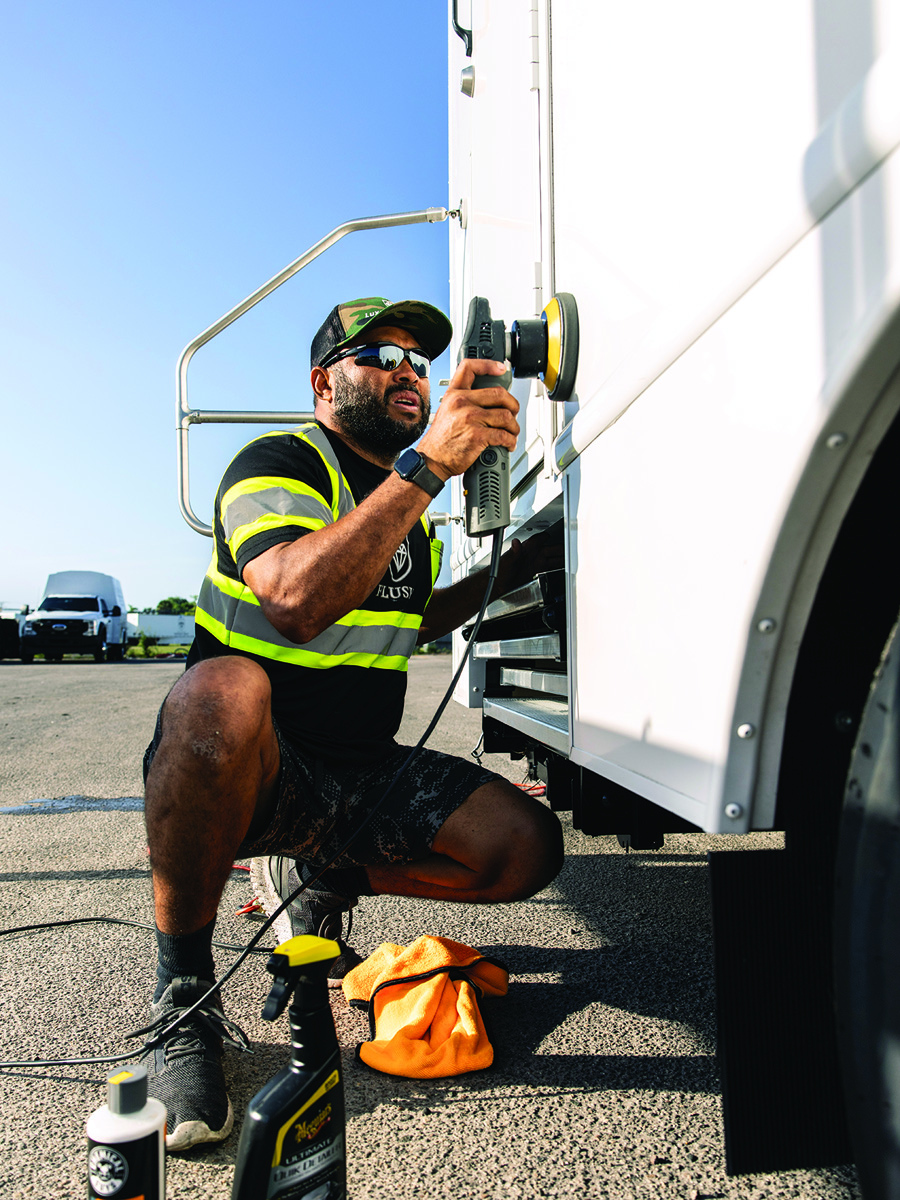
At four years old, a restroom trailer is completely revamped until it looks brand new, Moore says. “We have teams that every day are spray painting undercarriages, ripping out insides, putting new sinks and backsplashes in, buffing and polishing the outsides.”
Moore says he’s a huge believer in image. “It’s everything. And when you’re talking about the sanitation industry where people just think ‘nasty,’ we show up and we’re totally different.”