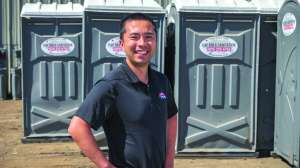

Providing sanitation equipment for World Cup activities in Kansas City was a once-in-a-lifetime experience for Dave McKahan, owner of Metro Rolloff Container Services.
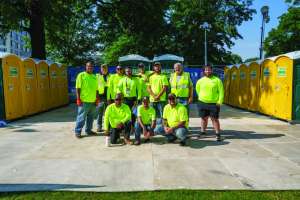
Located in Parkville, Missouri, McKahan and his team of 30 (21 in portable restrooms, nine on the roll-off side), took on the challenge with open arms. His operations manager Nick Pence coordinated equipment, people and layouts. Chief financial officer Julie Laquerre handled financial aspects.
Company history
In 1981, while still in high school, McKahan started a car repair business. He was out of commission for a while after a serious vehicle accident three days after graduation, but eventually got back to his company. In 2008, the business provided him an asset that propelled him into the waste hauling industry when he had the opportunity to buy some roll-off containers.
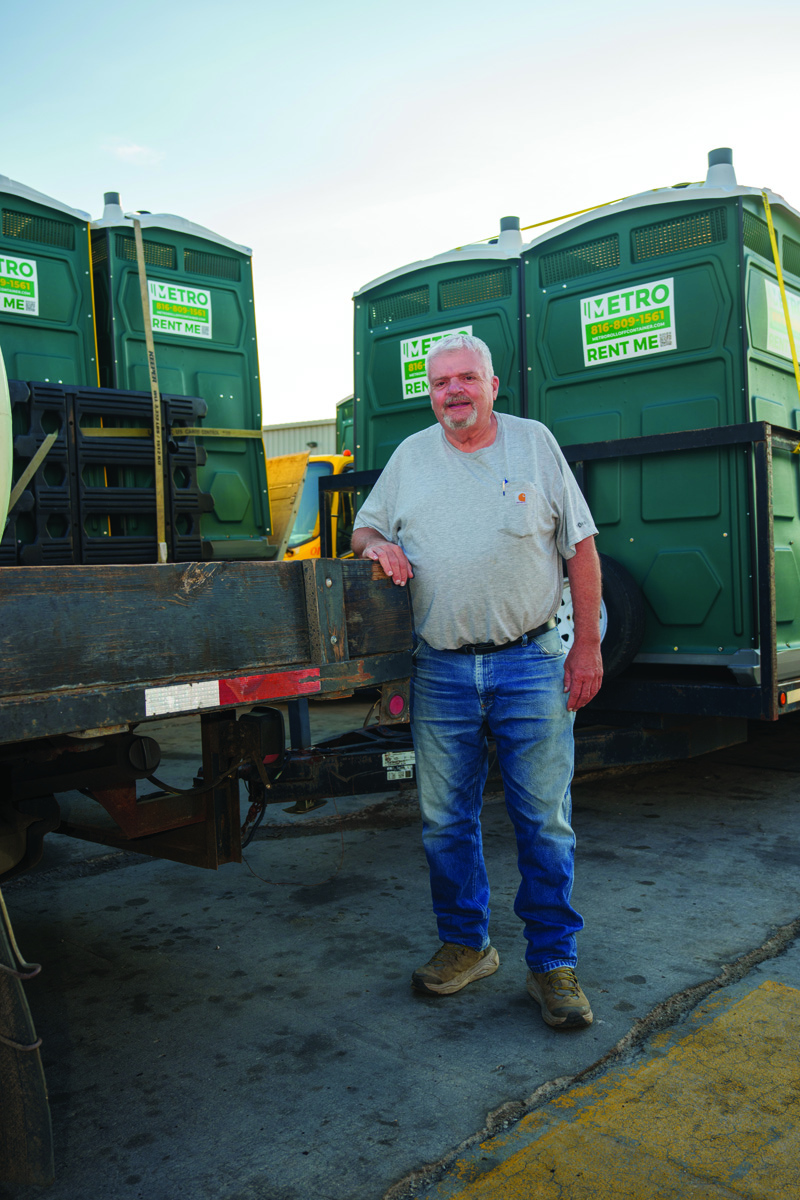
“I had the ‘holy grail’ of hot rods,” he explains. “It was a 1932 three-window Ford coupe. I sold it to buy my first roll-off.” His plan was to repair, paint and sell containers. But he bought three, which turned to seven, which turned to 12. And people were requesting them. So he hired help and started a company. Metro now has over 150 containers.
A couple years later, when a large company asked if he had portable restrooms, he said, “Give me till Friday.’” He bought a load of PolyJohn PJN3 units and a Best Enterprises tank which he rigged out on a Ford truck. The company now has about 1,400 pieces of sanitation equipment.
The main event
The 2026 FIFA World Cup, wich the United States, Mexico and Canada hosted from June 11 to July 19, 2026, had a viewing audience numbering in the billions. Kansas City was one of 16 host cities.
Teams faced off in the city at Arrowhead Stadium, but across town a 65-foot pink heart-shaped arch also welcomed fans to the Fan Festival at the National WWI Museum and Memorial. Giant screens were set up for viewing the games alongside live entertainment (headlined by Missouri native Sheryl Crow) and food vendors. The crowd capacity each day was 25,000 people.
Making connections
When McKahan learned in the fall of 2025 that the World Cup was coming to Kansas City, he wasted no time trying to get in on the action. The event required standard and ADA-compliant portable restrooms and handwash stations at Fan Festival, the stadium parking lot, parking sites around the city, the airport, and for police, FBI and drone operators.

“I started chasing it,” McKahan says. “I got on their websites, their vendors’ list and I sent in our qualifications.”
The next step was email communication, which led to conference calls. “Those calls were from all over the world,” McKahan says. “One included a man from Italy, a lady from Colorado, a lady from Kansas City, a person from Texas, myself and my CFO. They were asking about our company. Finally I said, ‘Have you ever done business with born-and-bred Midwest Americans? We do what we say we’re going to do. And if necessary you’ll see my butt out there in the truck. If you want us, I’m going to make this happen.’”
A few days later, in January 2026, the company received an email saying they had been awarded the contract.
Ramping up
McKahan’s team got right to work. They drafted documents, reviewed blueprints and topographic maps, and participated with FIFA organizers in equipment layout decisions. Pence attended onsite meetings.
The company also ramped up equipment and personnel. They bought another vacuum truck, hired five people and purchased (and assembled) approximately 125 restrooms and 70 handwash stations.
Layouts and numbers were ever-changing up until the event, which the company always accommodated to the best of their ability.
Security requirements were intense. “Nick used to be a full-time police officer and is still active, which helped,” McKahan says. “Everyone had to have a background check and were issued a lanyard ID pass.”
Let's roll

The company supplied 275 standard units, 36 ADA-compliant units and 78 handwash stations (all from J&J Portable Sanitation Products). The yellow-and-green units had J&J motion-sensored lights, hand sanitizer dispensers and urinal screens.
Deliveries began in mid-May for setup crews, with the bulk of the units being delivered the last week of May.
Seven clusters were set up around the Fan Fest property, each with 10 to 55 portable restrooms along with ADA-compliant units and handwash stations, placed on event-provided plastic flooring for stability and lawn protection. All units in a cluster were fastened together for stability.
The last game in Kansas City was July 11 and equipment removal began the next day.
Keepin’ it clean
Pence developed a servicing plan, which he shared with event organizers and the police. Teams were formed and color-coded. (“This color team does these restrooms at these times.”)
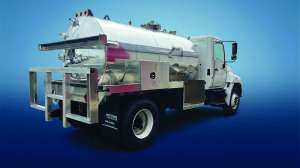
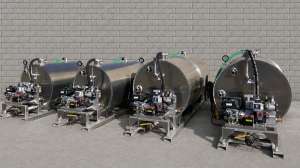
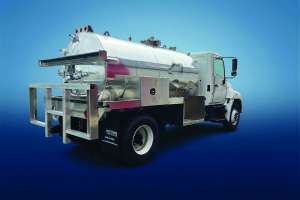
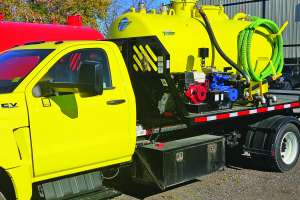
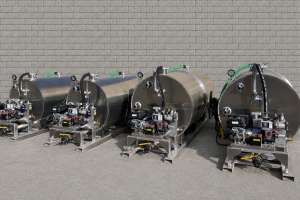
With in-house mechanics, welding equipment and metal fabricating facilities, the company builds out their own vacuum trucks with Ford F-550s, 800-gallon waste/300-gallon freshwater aluminum tanks from Robinson Vacuum Tanks, Masport pumps and MME pressure washers. Six were used for the World Cup.
The original plan was to service Fan Fest equipment at 1 a.m. on game days, but at the last minute the police said no, do it between 6 and 8:30 a.m. to more easily accommodate the required daily security screening that included bomb-sniffing dogs. A second cleaning was done late afternoons on requested days. Other locations were serviced between midnight and 6 a.m., and occasionally again later in the day.
Equipment was pressure washed at every service with a nonresidue fragranced soap. The company uses J&J deodorant products.

Metro uses a “nurse truck” on large events. It carries 800 gallons of water for filling units and trucks and for pressure-washing. They had 24-hour access to bulk water filling stations in the Kansas City area. They also had 24-hour access to the wastewater treatment facility.
A unique opportunity
McKahan reports everything went great and they received a lot of good feedback and gratitude from fans. “And organizers said it was a pleasure doing business with us and that we made that part of their job easier,” he says. “They appreciated how we took charge of the situation and made it happen.”
The biggest challenge was the weather. “We had to deal with a lot of rain and mud and soft conditions to where we couldn’t get trucks in close,” McKahan says. “But with a little bit of creativity, we adapted and got everything done in the required time frames.”
The event was exciting for everyone involved, McKahan says. “I can now say that Metro Rolloff has done the biggest sporting event in the world. It shows what my team’s capability is. They did a lot and enjoyed doing it. Now they’re wanting me to find the next big one.”
Continue reading for free