
Satellite Sense gives portable sanitation operators greater visibility into what is happening with their equipment in the field. By monitoring usage, waste levels, GPS location, temperature, tip-over events, and service activity, operators can make more informed decisions about routes, service frequency, and where their teams are needed most.
From Scheduled Service to Informed Service
Use real-world usage and waste-level data to better understand when units actually need attention instead of relying solely on predetermined service schedules.
Improve Route Efficiency
Reduce unnecessary service trips and windshield time, helping drivers focus on the stops that need service and allowing companies to get more from existing trucks and routes.
Know Where Your Assets Are
GPS visibility helps drivers, dispatchers, and customer service teams quickly locate units that have been moved or are difficult to find.
Respond Faster to Field Issues
Tip-over detection and real-time field visibility help operators identify issues sooner and respond proactively instead of waiting for a customer to report a problem.
Verify Service
Service confirmation provides greater accountability and gives operations and customer service teams better information when questions arise about completed service.
Use Data to Strengthen Customer Contracts
Historical usage data can help operators make more informed recommendations for service frequency, unit quantities, future events, and customer bids.
Make Rural Routes More Efficient
For rural and geographically dispersed routes, better visibility can help operators avoid unnecessary long-distance trips and use driver time more effectively.
Monitor Changing Conditions
Temperature data provides another layer of field visibility, helping operators better understand conditions affecting units during periods of extreme heat or cold.
Manage by Exception
Instead of treating every unit the same, operators can focus attention on the locations and assets that actually require action.
Create More Capacity for Growth
Greater efficiency can help companies get more from their existing drivers, trucks, and equipment — creating additional capacity as the business grows.
Portable sanitation operators have traditionally relied on fixed service schedules, driver experience, customer calls, and manual checks to manage units in the field. Satellite Sense changes that by providing real-time visibility into key information including usage, waste levels, GPS location, temperature, tip-over events, and service confirmation.
The result is more information operators can use to make better decisions: reducing unnecessary service trips, improving route efficiency, responding faster to issues, verifying service, and understanding how units are actually being used.
For operators managing hundreds or thousands of units, that visibility can turn everyday field data into a powerful tool for improving efficiency and getting more from the people, trucks, and equipment they already have.
The next efficiency opportunity is already in the field
For portable sanitation companies, efficiency has always been closely tied to the route.
Every truck has a limited number of hours in the day. Every driver can make only so many stops. Fuel, labor, equipment, disposal, maintenance, and drive time all contribute to the cost of servicing a portable restroom.
The challenge is that operators have historically had limited visibility into what is happening at a unit between service visits.
A restroom scheduled for service may have experienced very little use. Another unit on the same site may be seeing significantly more traffic. A toilet may have been moved from its original location. A unit may have tipped over. And unless someone is physically there or a customer makes a call, the operator may not know.
That creates an important question: What if operators could make service decisions based on what is actually happening in the field instead of relying primarily on assumptions and fixed schedules?
That is the idea behind smart monitoring technology.
Satellite Sense is a smart monitoring device from Satellite Industries designed to give portable sanitation operators greater visibility into their fleets. The system monitors information including GPS location, usage, waste levels, temperature, tip-over events, and service activity, giving operators additional data they can use to manage their businesses.
From Scheduled Service to Informed Service
Traditional route planning works largely around schedules.
A unit is assigned a service frequency, placed on a route, and serviced according to that schedule. It is simple and predictable, but scheduled frequency does not always reflect actual usage.
Two units rented for the same length of time can experience dramatically different demand.
A restroom on a busy commercial construction site may receive steady use throughout the day. A unit serving a small crew at a remote site may receive a fraction of that traffic.
Without usage or waste-level information, both may appear identical on a service schedule.
Satellite Sense adds another layer of information.
By monitoring waste levels and usage, operators can better understand what is happening across their deployed fleet. Satellite specifically identifies reducing unnecessary trips to toilets that do not yet require servicing as one application of its waste-level monitoring technology.
That information creates opportunities to make smarter operational decisions.
Instead of asking only, “Is this unit scheduled for service?” operators can begin asking, “What does the field data tell us about this unit?”

Fewer Unnecessary Miles Can Mean Greater Route Efficiency
One of the largest opportunities is reducing unnecessary windshield time.
Sending a service truck to a unit that does not yet require service consumes driver time, fuel, truck capacity, and equipment life. Multiply that across a large service territory and hundreds or thousands of units, and even small improvements can become meaningful.
Greater visibility can help operators identify patterns and make more informed routing decisions.
A low-use location may eventually support a different service frequency. A consistently high-use location may require additional attention. Units spread across a rural service area can be evaluated based on actual field conditions rather than relying exclusively on a predetermined schedule.
The objective is not simply to service fewer toilets. It is to put service resources where they provide the most value. That distinction matters.
Better information can help companies use existing drivers and trucks more effectively, particularly as their businesses grow. Instead of immediately adding another route, truck, or employee to accommodate growth, operators have another tool for examining whether additional capacity can be created through greater efficiency.

Know Where Your Assets Are
Efficiency isn't limited to pumping and cleaning.
Portable restroom operators also spend time locating equipment.
Units can be moved around construction sites, repositioned by event organizers, relocated without authorization, or simply become difficult to find on a large property.
Satellite Sense provides GPS location information for equipped assets, helping operators locate units in the field. Satellite notes that this can reduce the time dispatchers, customer service teams, and technicians spend locating moved or missing units.
Consider a driver arriving at a large festival site or construction project with dozens — or hundreds — of assets spread across the property.
Searching for a restroom is not productive route time.
Knowing where the asset is before the driver begins looking can help keep the route moving.
GPS information can also provide greater visibility when equipment has been relocated or potentially removed from its intended location.
Respond to Problems Before They Become Bigger Problems
Not every efficiency gain comes from eliminating a service stop.
Sometimes efficiency means knowing exactly where your team needs to go.
A tipped-over portable restroom is a good example.
Without monitoring, the first notification may come from a customer, site manager, or end user. By that point, the issue has already affected the customer experience.
Satellite Sense detects tip-over events, giving operators greater awareness when a unit requires attention.
That information allows dispatch teams to react faster and communicate proactively with customers.
Instead of: "We weren't aware of the issue," the conversation can become: "We can see there is an issue with the unit and we're working to address it."
That shift from reactive to proactive service can have value well beyond operational efficiency. It can strengthen customer confidence and help operators differentiate their service in a competitive market.

Service Confirmation Creates Accountability
Another valuable piece of the efficiency equation is knowing whether service occurred.
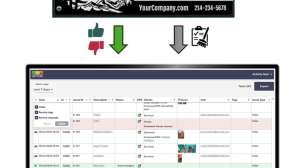
Satellite Sense data can integrate with ServiceCore, providing operators with field information alongside software used to manage portable sanitation operations. Satellite identifies service confirmation and usage insights as benefits of the integrated solution.
That creates another layer of operational visibility.
For dispatchers and managers, service confirmation can help answer questions without relying entirely on phone calls between the office and the driver.
For customer service teams, it can provide useful information when responding to a customer asking whether a location was serviced.
For customers, documented service information can create additional confidence that contracted service is being performed.
And for management, it creates more data for evaluating routes and overall operations.

Data Can Help Operators Build Better Customer Contracts
The benefits of monitoring become particularly interesting when operators begin looking beyond daily routing.
Usage information can provide insight into how sanitation equipment is actually being utilized.
For event operators, historical usage information can help inform future planning and bidding.
If an operator services a large annual festival, for example, actual utilization data can provide another reference point when determining how many units may be appropriate for the following year's event and where those units should be positioned.
Commercial construction presents a similar opportunity.
As a project changes phases, workforce levels and restroom demand can change. Usage information gives operators another source of information for discussing service levels with customers.
Instead of basing every conversation entirely on estimates, operators can increasingly support recommendations with field data.
That can make the portable sanitation provider more than an equipment supplier.
It positions the operator as a knowledgeable service partner.
Rural Routes: Where Visibility Can Have an Outsized Impact
Efficiency becomes even more important when routes cover large geographic areas.
A service stop several miles away from the rest of a route carries a much different operational cost than another unit located two blocks away.
Agricultural operations, remote jobsites, parks, recreation areas, and other rural applications can create long distances between assets.
In these environments, GPS location, usage information, waste-level monitoring, and temperature data can give dispatchers additional information before sending a truck across a large service territory.
Avoiding even one unnecessary long-distance trip preserves driver time and truck capacity that can be used elsewhere.
For operators trying to expand their service territory without allowing route costs to grow at the same pace, that visibility can become increasingly valuable.
Temperature Adds Another Layer of Operational Awareness
Portable sanitation operations also change with the weather.
Satellite Sense monitors internal tank temperature, giving operators additional visibility into environmental conditions affecting units in the field.
That information can be particularly useful during extreme hot or cold conditions.
Rather than relying only on general weather information for a region, operators can gain visibility into conditions at individual monitored units and use that information as another input when evaluating servicing and chemical needs.
It is another example of turning something that was previously difficult to see into actionable operational information.
The Bigger Opportunity: Managing by Exception
Perhaps the most important change introduced by connected equipment is the ability to manage more of the business by exception.
A growing portable sanitation company may have hundreds or thousands of units in the field.
The goal is not for dispatchers to stare at hundreds of data points all day.
The value comes from quickly identifying the units and locations that deserve attention.
- Which units are seeing unusually high use?
- Which units have low waste levels?
- Which restroom has moved?
- Where has a tip-over occurred?
- Was the scheduled service completed?
- Which locations consistently require more or less service than expected?
When technology helps surface those exceptions, managers can spend less time searching for information and more time acting on it.
Efficiency Creates Capacity for Growth
For growing portable sanitation companies, efficiency ultimately comes down to capacity.
- How much revenue can each truck support?
- How many units can each driver effectively service?
- How large of a territory can the company manage?
- How many customers can the existing team support before another truck, driver, dispatcher, or piece of equipment needs to be added?
Technology does not eliminate those investments.
But better information can help operators get more from the resources they already have.
Reducing unnecessary service, shortening the time spent locating equipment, responding faster to field issues, verifying completed service, and using actual utilization data to evaluate service frequencies can all contribute to a more efficient operation.
At scale, small improvements across hundreds of daily decisions can have a significant impact.
Turning portable restrooms into connected assets
The portable sanitation industry has always been an asset-heavy, route-driven business. That is not changing.
What is changing is the amount of information operators can have about those assets once they leave the yard.
Satellite Sense gives operators greater visibility into units in the field through GPS location, usage, waste levels, temperature, tip-over detection, and service information. Integrated with ServiceCore, that information can become part of the operator's everyday workflow rather than another standalone system.
The opportunity is straightforward: Know more about what is happening in the field so you can make better decisions about where your people, trucks, and time should go next.
For an industry where profitability can depend heavily on route density, driver productivity, fuel, service frequency, and equipment utilization, better information can translate directly into a more efficient operation.
And as portable sanitation companies continue to grow, that visibility may become less of a competitive advantage and more of an operational expectation.
Learn more about Satellite Sense and how connected monitoring can help improve your operation at Satellite Industries' Satellite Sense page.