Volatile fuel costs and uncertain economic times over the past few years have translated into a roller coaster of price changes for many companies. Nowhere has this been felt more strongly than in businesses that depend heavily on transportation.
Adjustments are made as fuel prices abruptly spike, then — more slowly, of course — settle back down. Job losses and layoffs force would-be customers to severely tighten their belts. And unwelcome low-ball competitors arrive in a market. These PROs tell us how their rental rates have reflected what they’re going through.
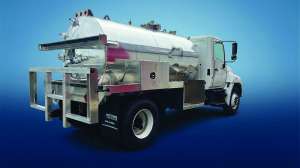
Two years ago, Sweet Pea Potties Inc. raised its prices $10 for a single unit rental fee, says manager Louis Kress. The increase was directly related to covering fuel costs. Fuel is the major concern for the company, which fields 250 units and three vacuum service trucks. Located in the heart of the Allegheny Mountains, Sweet Pea’s trucks rarely see optimum mileage per gallon, since they often drive on steep mountain roads that eat up fuel. Drivers also put on at least 50 miles for a disposal trip to a public treatment plant.
About a year ago, the company dropped its rental fee by $5, as fuel itself showed a sustained drop in price. Kress says that even in the current recession, customers haven’t asked for any further drop, which is a good thing, because even if they did, none would be forthcoming. “There’s so many other things going up on us anyway — chemicals and everything — that right now we can’t afford to go back down.”
“The reason our prices go up and down is that we have so much competition,” says Eugene Fryman, co-owner of A-1 S & E Septic Service. “The slower (competitors) get, the cheaper their price gets.” Burlington is located in Boone County, Ky., the small lobe that extends between Indiana and Ohio. With a population of about 14,000, it supports many portable restroom operators.
“My prices haven’t dropped,” he says, “but the competitions’ have. For instance, their septic pumping prices went down (30 percent). It’s lowering the value of the market, but the worst thing is the feedback we get from the sewage treatment plant. Our costs to dump keep going up, but these competitors continue to pump for cheap.”
Adds Rita Fryman, Eugene Fryman’s wife and business partner: “And how long can you stay in business if you’re not making any money?”
The Frymans believe low-ball contractors will eventually work themselves completely out of profits and, one way or another, go out of business. Meanwhile, A-1 isn’t waiting around.
“We’re expanding our service territory to take on five new counties, so we don’t just depend on the area we’re in now,” Eugene Fryman explains. The new territory is south of their original service area. “We just had to go out into the country. I’m going to continue to try to expand where I know I won’t have much competition.”
The Frymans offer ancillary septic pumping services, which helps shore up their bottom line when price competition becomes too great in their portable restroom division. “We’ll dig up and repair systems that aren’t working right,” says Rita Fryman. “Most of our pumping competitors don’t offer that.” The couple figures that for every 10 pumping calls, they get one repair service job. In the intense competitive atmosphere they work in, this diversified service has been what enables them to continue offering portable restrooms.
In the past five years or so, rental prices have trended up for Mr. John in this northwestern Pittsburgh suburb. “As of recently, they’ve gone down,” says manager Alex McCarthy. “They’ve gone down with our competitors’ prices going down, but only on a special request basis from some of our oldest and most loyal customers. Our main price is still where it was. Our construction unit price remains steady overall, and when we have dropped, it’s only been by about (5 percent). Not enough to make a huge difference in our bottom line.”
Continue reading for free