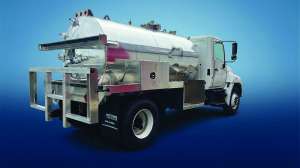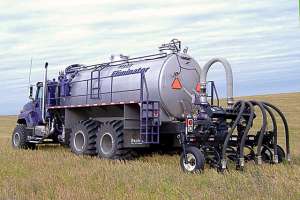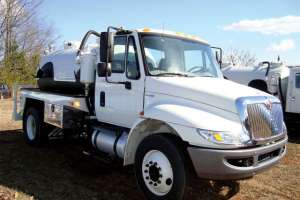
QUESTION: What do you think is the best type of transmission for a service truck, automatic or standard shift?
Ray O’Riley
Helena, Mont.
ANSWER: There are a couple ways to look at this question. If you are the owner/operator, then buy the truck you like to drive. If you’re going to be living in this truck, it should suit you and your needs.
If you are buying a truck to have other drivers at the wheel, it’s time to consider the automatic. Many younger drivers today know nothing about shifting gears. They understand gas and brake. Obviously, the purpose of the job is to drive, pump, collect the fees and go home. Take a look at your situation and make the move that’s going to maximize your profits.
Do you want to train someone to drive a standard transmission truck? Will the cost of training that driver be offset by the cost of ordering an automatic? Most larger companies these days are taking the path of least resistance: automatics.
Brake it to him gently
QUESTION: I bought a used truck and everything was going pretty well until the brakes went out. Did I make a mistake buying a truck with hydraulic brakes? The guy who sold the truck said hydraulic brakes were the best way to go.
Lonnie Glenn
Savannah, Ga.
ANSWER: When it comes to brakes you have two choices: air or hydraulic. Hydraulic brakes are initially cheaper on a new truck, but the downside is they require more maintenance. As you know, hydraulic brakes come with a hand brake. But, when it wears down and regular adjustments aren’t made, when you park on a hill you’ll find the truck at the bottom of the hill in a short time. And if the hand brake is in the locked position and the driver forgets it’s engaged, around the town he goes and it’s time for a new set of brakes.
Most truck owners prefer air brakes over hydraulic. They cost more when the truck drives off the lot, but fewer things can go wrong and there is definitely less required maintenance. You might ask the guy you bought the truck from what he likes about hydraulic brakes the next time you see him.
Sizing the primary and secondary
QUESTION: I should have noticed this before I bought my truck, but for some reason, somebody installed a 3-inch primary, while the secondary is 11/2 inches. Does this matter? I’ve read your articles on the importance of airflow, but to me, airflow is airflow and this doesn’t matter. What do you think?
Rex Baird
St. Paul, Minn.
ANSWER: I think it’s time to replace your primary. A steady, even airflow is the key to a properly operating vacuum system. Pulling air through a 3-inch opening and funneling it down through a 11/2-inch opening creates a dramatic change in the speed of flow. Vacuum systems are designed to move the same amount of air from the tank, through the primary, through the secondary, and then through the pump.
When the previous owner replaced the primary, for whatever reason, he probably pulled one off his shelf and installed it, regardless of the right fit. The larger primary will work, but your system will not be as efficient as it should be. The basic rule is simple: The primary and secondary should be the same size.
Checking the vacuum and pressure relief valves
QUESTION: It’s been about six weeks since I checked my vacuum relief and pressure relief valves. Is there a rule of thumb as to how often they should be checked? So far, everything is running great.
Javier Domingus
Albuquerque, N.M.
ANSWER: They must call you Mr. Lucky. Your vacuum relief valve prevents your tank from collapsing and your pressure relief valve is designed to keep your tank from exploding. With consequences like those, you need to check these vital parts once a week. If they become stuck or freeze up for any reason, you could be shopping for a new service truck, or at least a new vacuum tank. Get them checked.
Continue reading for free