
Snow, ice, freezing temperatures and reduced daylight can quickly turn a well-maintained restroom site into a hazard if not proactively managed. For PROs, event organizers and service technicians alike, keeping restrooms clear, clean, and accessible during winter months is a critical component of risk management and customer satisfaction.
Start with strategic placement
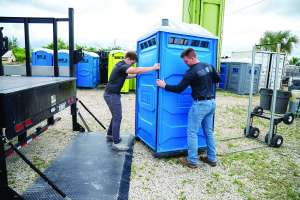
The foundation of winter restroom safety begins with placement; units should be set on level, well-drained surfaces whenever possible. Avoid low spots where meltwater can freeze overnight and create sheets of ice around entryways. Gravel pads or compacted stone bases perform significantly better than bare soil in winter conditions, reducing both mud and ice buildup.
Equally important is proximity. Restrooms should be positioned close enough to work areas or event spaces to minimize foot traffic over slippery ground, but far enough away to avoid congestion from vehicles, equipment or plowed snow piles. When sites change seasonally, reassess placement rather than relying on warm-weather layouts.
Proactively control snow and ice
Snow removal around portable restrooms should be treated as a priority, not an afterthought. Clear pathways to and from the units, as well as the immediate area around doors, steps and hand-washing stations. Even a few inches of snow can conceal ice, uneven ground or frozen ruts that create trip hazards.
Ice control is equally essential. Apply ice melt products regularly, especially after plowing or temperature fluctuations. Use materials compatible with the surrounding surface and environmentally appropriate for the site. Sand or traction grit can provide immediate grip in high-traffic areas, particularly where ice melt alone is insufficient due to extreme cold.
For serviced sites, technicians should carry ice melt and apply it during each visit as needed. This small step demonstrates attention to detail and helps prevent accidents between scheduled maintenance intervals.
Maintain clear, stable access points
Steps, ramps, and entry mats require extra attention in winter. Portable restroom steps should be securely anchored and inspected frequently for ice buildup, loose hardware, or shifting caused by freeze-thaw cycles. Nonslip treads must remain visible and unobstructed; packed snow defeats their purpose.
Ground mats should be heavy-duty, textured and designed for outdoor winter use. Lightweight mats can curl, crack, or slide on icy surfaces, creating new hazards rather than mitigating them. Regularly reposition and inspect mats to ensure they remain flat and functional.
For ADA-compliant units, ramps must be kept completely clear of snow and ice; even minor accumulation can render a ramp unusable and expose operators to compliance and liability risks.
Keep the interior clean and dry
Winter conditions make it easier for moisture, salt and debris to be tracked inside restroom units. Once inside, these materials can freeze, creating slick floors and unpleasant conditions for users.
Increase the frequency of floor cleaning during winter months and use absorbent floor materials when appropriate. Technicians should remove snow and slush from their boots before entering units during service to avoid compounding the problem.
Ventilation also plays a role. Proper airflow helps reduce condensation, which can freeze on surfaces overnight. Ensure vents are clear of snow and ice and functioning as designed.
On the flip side of ensuring proper ventilation, technicians should check that the unit’s door closes properly and that built-up snow and ice don’t impede its closure.
Improve visibility and communication
Shorter days and overcast conditions reduce visibility around restroom sites. Adequate lighting — either permanent or temporary — can significantly reduce trip hazards by making pathways, steps and surface conditions easier to see. Reflective markers or tape on steps and ramps further enhance visibility in low-light conditions.
Clear communication with customers is also essential. Establish expectations about snow removal responsibilities and service access during winter weather. When clients understand what the service provider handles versus what the site owner must manage, safety outcomes improve.
Make winter safety part of your SOPs
Ultimately, winter restroom safety should be built into standard operating procedures, not treated as an exception. Seasonal checklists, technician training, and site audits help ensure consistency across locations and crews.
By focusing on placement, proactive snow and ice control, stable access points, interior cleanliness and visibility, portable sanitation professionals can keep restrooms safe, and accessible in the harshest winter conditions. In doing so, they protect users, reduce liability, and reinforce their value as trusted partners throughout the year.
Continue reading for free