
From analyzing financial metrics to rating employees’ performance to ensuring that training and quality-control measures are effective, A-1 Little John Site Services in Denison, Texas, embraces a data-centric business strategy.
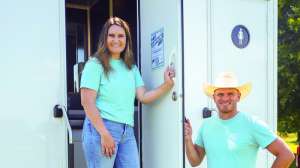
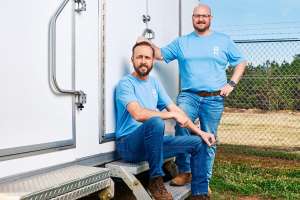
Owners Jim and Shellee Copeland and their three sons — Clay, Cody and Cole — have parlayed this penchant for crunching numbers into a well-diversified, multimillion-dollar-per-year company.
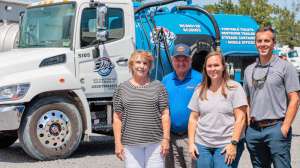
“My dad is a third-generation entrepreneur and Clay and I are fourth-generation entrepreneurs, so we just know business,” says Cody Copeland, age 27, vice president of sales. He notes that he has a college degree in economics while Clay, vice president of operations, and his father both have business degrees. Cole is the routing and logistics manager and his mother was heavily involved with the company for decades and played a valuable role in growing the company, he says.
“If you track things — whether it’s monthly sales revenue, the number of restrooms you have out or the total number of daily services, for example — your business will get better,” he says. “We didn’t look at metrics for a long time. But when we started to grow a lot and we weren’t out driving service routes any more, we finally had time to take a look at the company from a 30-foot view and analyze things.”
Taking that overall aerial view of operations and working on the business, not in it, paid dividends. When Copeland’s parents bought AAA Little John and renamed it in 1998, they owned about 115 restrooms, one service truck, employed just one person and generated around $150,000 in revenue annually. It served customers within about a 30-mile radius of Denison, which is about 75 miles north of downtown Dallas, near the Oklahoma border.
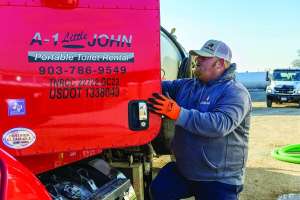
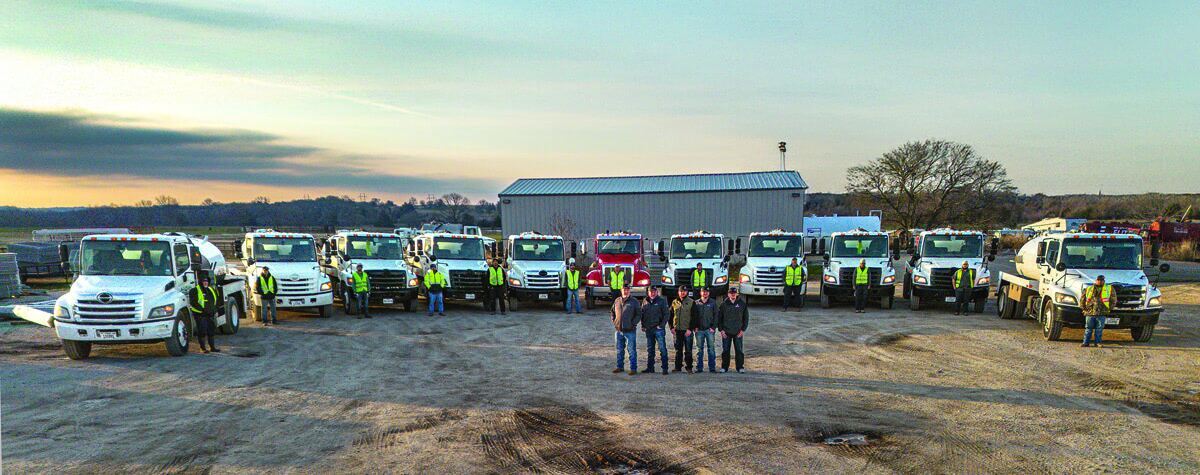
Today, the company owns about 5,000 restrooms and a dozen restroom trailers, runs more than 50 restroom service vehicles and employs nearly 60 people. It serves customers in 26 counties in the sprawling Dallas-Fort Worth metro area and operates a second facility in Kennedale (a southeast suburb of Fort Worth) to better serve that densely populated market.
In addition, the company averages about 15% annual revenue growth since 1998. And by the end of 2025, Copeland expects that revenue will be three times what it was in 2021.
“There’s money to be made in this industry if you can figure out how to grow and scale the business,” he says. “But there’s no blueprint available. You have to get in there and get your hands dirty and figure out what works for you.”
“If you can get out of a truck and train people properly and ensure quality service, and if your branding is on point, you can reap the benefits,” Copeland adds. “But it takes time, money and a lot of really, really good people.”
The company also has made investments to diversify into other services such as temporary fencing, industrial cleaning and roll-off dumpster rentals for handling construction, demolition and industrial waste. As such, it also owns around 200 roll-off dumpsters from Keystone Waste Solutions, close to 100,000 feet of temporary fencing and an industrial vacuum truck with a hydroexcavation package, built by Guzzler (a subsidiary of Federal Signal Corp.). Built on a Kenworth T880 chassis, the truck is equipped with a 3,500-gallon debris tank and a vacuum pump built by National Vacuum Equipment.
About 90% of restroom-rental revenue comes from monthly rentals and special events contribute the balance. Overall, restroom rentals account for 75% of the company’s annual revenue while industrial services kick in 15% and fencing and roll-off dumpster revenue generates the rest, Copeland says.

Entrepreneurship beckoned
Jim Copeland was working for a chemical company in 1998 when his late father, Don, who used to own and operate a trash collection business and a landfill with his wife, Martha, told him a portable restroom company in nearby Sherman was for sale. The Copelands decided to give it a go.
Clay Copeland joined the company in 2013, Cody followed in 2019 and Cole came aboard in 2021.
Providing top-notch customer service has been a cornerstone of the company’s success. In the portable sanitation industry, quality control should start with standard operating procedures for drivers, then use those procedures to hold drivers accountable — no matter how big a company gets, Cody Copeland says.
“Service comes first,” he says. “That’s how we went from one truck to two trucks to three trucks to 10 trucks and so on. Good service opens a lot of doors to sell more work and do more marketing.”
“You have to build a culture and have the right quality controls in place to ensure that growth is functional and efficient,” he adds. “Growth is short-lived if it’s not efficient and functional.”
Drivers run between 75 and 80 routes a week for cleaning restrooms, not counting pickups and deliveries, he says.
A focus on quality service
A key component of the company’s quality-control efforts is random checks on restroom cleanliness performed by staff who devote about half their time to quality control. The company holds a weekly 45-minute to one-hour-long meeting with technicians on Tuesday mornings; they’re told periodically that someone will be following them on their routes, but the drivers don’t know who will be checked.
“These weekly meetings help set the tone — create a culture in which they know they’ll be held accountable,” Copeland says. “Having that in the back of their minds keeps them performing the way they should perform.”
The company also holds a meeting every Monday morning for its 10-person leadership team. Attendance is mandatory. Topics might include issues that cropped up the week before; a review of key financial performance indicators, including year-over-year comparisons to give employees some perspective; and other timely items.
“We want them to know about the company’s financial health,” Copeland says. “We track a lot of different metrics including things like routes that take more than 11 hours. This helps ensure we’re not paying too much overtime and that we have the right levels of route density.”

Integrating core values
The Copelands developed eight core values that the company uses to evaluate employee performance as well as for hiring and firing employees. The values state that every team member must always:
- “Ride” for the brand (which means employees take ownership of their work, honor their commitments and stand behind the company’s reputation)
- Demonstrate the grit to complete jobs every time
- Contribute as a team player
- Solve problems independently
- Respect team members and customers 100% of the time
- Be conscientious about details
- Demonstrate excellent communication skills
- Be eager to get coached to the next level
“We also cross-train a lot,” Copeland notes. “But not everyone — some people just like to drive a route and not have to communicate with customers. But others might do pickups and deliveries one day and install fencing on another day, for example.”
The company anticipates about a 20% turnover rate and plans for that accordingly by hiring more people than needed. While that may seem risky, Copeland says the company has never laid off an employee — something management is very proud of.
“We will hire quality people even if there’s no driver jobs available,” he explains. “There’s always something for them to do around here.”

Large roster of equipment
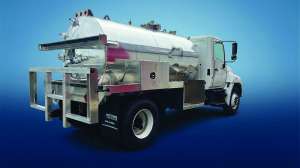
To service restroom customers, the company runs about 40 vacuum trucks. Most of them are built on Hino 268 chassis and feature tanks primarily made by Abernethy Welding & Repair and vacuum pumps from Masport. The tanks typically hold 1,500 gallons of waste and 500 gallons of freshwater.
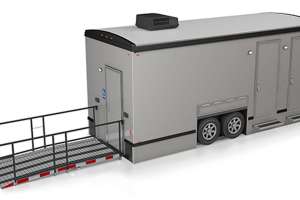
The company also owns around 5,000 restrooms, mostly Tufway units from Satellite Industries; 12 restroom trailers from Satellite and Rich Specialty Trailers, plus one built by Lang Specialty Trailers; and eight vacuum trucks (used to haul waste), rigged out on Kenworth, Freightliner and Peterbilt chassis. The trucks generally are equipped with 5,000-gallon steel tanks by Morocco Welding and Stephenson Specialty Trucks and vacuum pumps manufactured by Masport and NVE.
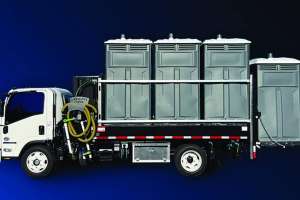
For delivering and picking up restrooms, as well as cleaning them, the company also relies on seven one-ton Dodge 3500 pickup trucks equipped with Honda vacuum pumps and slide-in stainless steel tanks from Best Enterprises; the tanks hold 350 gallons of waste and 200 gallons of freshwater.
“We also can use these trucks on cleaning routes,” Copeland notes. “They give us operational flexibility. The more lines of business one asset can be used on, the better off we are.”

More keys to success
Offering complementary “bolt-on” services also benefits the company by providing additional revenue streams and positioning the company as more of a one-stop for customer convenience. Take temporary fencing, which the company added as a service in September 2024, he points out.
“Customers on the sanitation side also need temporary fencing, so why not offer it,” Copeland says.
But adding a service like fencing isn’t as easy as buying fence and promoting the service, he cautions. Companies need to hire more employees, which is expensive, and fencing costs a lot more than restrooms.
“If you can get to the point where your sanitation company can run itself to an extent, then I think it makes sense to look at other lines of business,” Copeland says. “I wouldn’t discourage people from trying something new, but fencing is a whole different beast.
“You’re usually competing against people who do only fencing, either locally or on a national level,” he continues. “Roll-off dumpsters fall into the same category. You shouldn’t add services until you have an established customer base.”
Another key factor in the company’s success: The Copelands realized they had to step away from day-to-day operations like driving routes in order to concentrate on more big-picture, strategic initiatives, he says.
“We didn’t want to give up those things, but you have to in order to sustain growth,” Copeland says. As an example, he notes that last January he made the difficult decision to no longer load every restroom for every route, realizing it wasn’t time well spent for a vice president of a company.
“That’s why we have so many metrics, standard operating procedures and training and mentoring programs,” he explains. “It takes a tremendous amount of training and trust — as well as putting parameters and processes in place — to ensure things get done the way you want them done.
“You have to step back and let people fail, then coach them up if they do.”

Solid growth prospects
As Copeland looks back, he’s proud of what his family has built.
“My father, Clay and I have pretty much done everything we can to make sure this company is successful,” Copeland says. “It takes a lot to do it; 60-, 70- and 80-hour work weeks are common. It’s a constant grind, but we’re proud of what we’ve accomplished.”
Looking ahead, Copeland says the company will remain in full-bore growth mode. Goals include doubling revenue, employing around 100 people and expanding the company’s geographic market in the next five years and significantly expanding the industrial services side of the business, he says.
“But we won’t grow like that unless it’s sustainable and we can keep taking care of customers the way they should be taken care of,” he says, “That’s definitely hard to do when you grow. You have to have really high quality people that are professionals and want careers and you have to build careers for them, too. And we’re doing just that, every day and all day.”
Continue reading for free