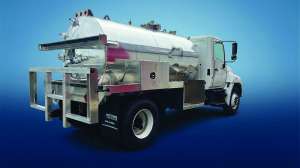
Even with all the global warming discussions all over the world, winter in America is coming on and it’s time to start thinking about maintaining our vacuum trucks for the changing weather. Everything is affected by cold weather.
Let’s take a look at some of the things we can do to make sure our equipment runs smoothly and efficiently through the chilly days ahead. Of course, all these maintenance tips are going to depend on exactly where you are. Being in Phoenix is going to be different from being in Minneapolis. This article focuses on the people who are in for real winter weather, but these tips can come in handy no matter where you live and work:
CHANGING VACUUM PUMP OIL
Pump manufacturers recommend going to a lighter weight oil in the winter. The lighter oil will ensure the pump does not bog down in lower temperatures. Masport, for example, recommends going from a GST ISO 68 Turbine Oil to GST ISO 46 Turbine Oil in colder climates.
If you have any questions or doubts about the oil in your vacuum pump, pull out your operating manual and check manufacturer recommendations. If your manual has disappeared (shame on you), call the people who sold you the unit, or go directly to the pump manufacturer for advice. Don’t assume that since everything is running well today, it will run just as well tomorrow.
THE EFFECTS OF WATER
Your vacuum system can be a source of trouble if you don’t watch it carefully. More than one pumping contractor can tell you stories about his vacuum pump freezing up, and as a result the housing cracking or the vanes breaking. Either way, digging into your bank account to pay for repairs is not the best way to go.
Often, the problem is water. The secondary needs to be drained every day after the truck has done its duty. It is never a good idea to drain the secondary the following day before starting out.
Obviously, a lot of water is pumped in the course of a day. It makes it past the primary and settles into the secondary. It is critically important that all that water is drained off. If you are pumping and the secondary is full or nearly full, the water ends up in the pump. The overnight temperature drops below freezing and when you start the pump the next day, vanes break. No pumping today!
It’s also a good rule to make sure there’s no water left in the hoses or anywhere in the system. The bottom line is that when water freezes, it expands. So when water left in the pump freezes, it expands, and when there is nowhere for it to go, the pump housing cracks. Again, no pumping today!
TRUCK ISSUES
You’ll want to check the oil systems operating your truck. First, you may want to thin the engine oil based on what your manufacturer suggests. Cold weather thickens the oil and hinders proper lubrication of a lot of expensive parts. You also should take a look at the oil in the rear-end differential because most manufacturers recommend shifting to a lighter weight gear oil.
The bearings need proper lubrication to operate efficiently. Again, don’t wait until you have problems before you pay attention to these areas. Preventive maintenance will save you a whole lot more than it will cost. And you already know what it means to say, “No pumping today.” Not only have you lost some of your income, but the odds are pretty good that somebody else is picking up that account and maybe more.
OVERALL TRUCK CONDITION
Winter is coming on. Know the overall condition of your truck. Some items always need to be checked: air pressure in the tires, oil levels (having the right weight oil isn’t going to help if you’re two quarts low), and the overall lighting system. Make sure the braking system is going to keep the driver safe. When you hear strange, unfamiliar noises, don’t pass them off thinking they are just going to go away.
Looked at your tires lately? Tire tread wears down quicker in summer due to the heat and hot stopping. So now with ice and snow on the road, are you going to be slip-sliding away? Think about winter tires and better traction, and depending on your location, what about tire chains? Nothing says productivity loss like the whirring sound of tires spinning round and round.
Even more basic to the smooth operation of your truck are things like anti-freeze and heated collars. Make sure the cooling system is refreshed and ready for your coldest temperatures and that heated collars are working properly. Snow also brings roads covered with salt, and nothing eats away quicker on your vehicle than salt. Maybe it’s time for a regular schedule of visits to the car/truck wash.
A simple tune-up will help with the operation of your truck as well as helping with your fuel efficiency. With the price of fuel being as high as it is, a well-tuned engine will help you get the most out of every gallon.
As summer shifts to fall and winter, every pumper needs a properly maintained truck and a safe truck. Taking care of those items now will save you money and minimize unfortunate work stoppages.
Robert Carlson is half of the team that answers reader questions in the Truck Corner column in PRO. He can be reached at truck corner@promonthly.com.
Continue reading for free