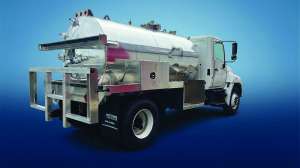
Vacuum truck operator Hal Parker of Buffalo, N.Y., asked us to elaborate on the basic requirements for an efficient vacuum service truck. To create a primer for readers to use the next time they order a service vehicle, we decided to answer his question in three parts. Last month, we covered matching the right chassis to the right vacuum tank and pump. This month we look at critical truck accessories.
Accessorize for success
The primary shutoff on top of the tank protects your pump from waste and debris. As the vacuum pump pulls air out of the tank, the first stop along the path is the primary shutoff. As debris is pulled through the line, the weight of the material and gravity cause it to fall in the basket of the primary shutoff. You don’t want anything but air getting to the vacuum pump.
The secondary moisture trap sits on the side of the tank and, as named, it offers a secondary line of defense to protect your pump. If waste materials manage to make it past the primary shutoff, then the secondary is there to — hopefully — catch it and prevent it from moving to the pump.
The primary and secondary should be sized appropriately based on the airflow, which is created by the pump. If the primary is sized too small, the airflow will pull the float ball up — regardless of the presence of waste — and shut down the airflow.
Most vacuum truck operators rely on these accessories to protect their pump. Still, there are some who say they are not needed. To the extent that a vacuum pump hooked up to a tank will pull a vacuum, they are correct. But without any checks on the flow of materials, it usually isn’t long before the pump is filled with debris — and requires costly repairs.
VACUUM AND PRESSURE RELIEF
The vacuum relief and pressure relief valves put limits on how much vacuum and pressure your tank will handle. When the vacuum reaches a certain level, the vacuum relief valve opens and allows air into the tank, which stops the vacuum from building beyond the level your tank can handle. The same is true for the pressure relief valve. If you are off-loading and the pressure inside the tank is rising to unsafe levels, the pressure relief valve opens and releases some of the pressure.
Like anything else, some pumpers think these valves are unnecessary. But they are two simple safety devices that can help prevent your tank from collapsing under excessive vacuum or exploding from too much pressure. And yes, tanks collapse every year and tanks do explode.
The pressure/vacuum gauge monitors the amount of vacuum (in inches) or pressure (pounds per square inch) inside the tank. It’s a good habit to read your gauge every day. It gives you a good indication of what’s normal and will give you clues when things aren’t working right. For example, suppose you’ve been getting 19 inches of mercury from your vacuum pump for many months and then, one day, the best your pump will do is 14 or 15 inches. Something is wrong and it’s time to check out the system.
OIL CATCH MUFFLER
The oil catch muffler serves two purposes. First, it catches the excess oil that is being spun off from the pump. Every vacuum pump spins around 1,100 rpm and oil is required to keep the pump lubricated and prevent overheating. Some of the oil moves on to the oil catch muffler. So that takes care of the “oil catch” part. The muffler part tries to quiet the sound of the pump.
One could argue this part isn’t necessary but without it you have one incredibly loud screaming pump that people aren’t going to want in their neighborhood. Secondly, in this day and age of everyone going “green,” the excess oil will get you in trouble if you don’t control where it goes.
So it’s your call. Knowing and understanding the parts of a vacuum truck are critical to your success. We recommend all the parts listed in this column. They are relatively inexpensive and can save you thousands of dollars over time.
***
Next month, in the third and final installment of the answer to Hal’s question, we’ll take a look at some of what we consider optional accessories.
Continue reading for free