Portable sanitation businesses run on their wheels, so keeping those trucks in prime condition is a high priority. And a routine maintenance schedule is the key to keeping your fleet in tip-top shape. Otherwise, it’s too easy to take a well-performing truck for granted and simply let things slide. That type of situation never lasts for long. Small problems can quickly turn into big breakdowns if not addressed, and those breakdowns always seem to come at the worst time, when workload is backed up and pulling a vehicle from the route rotation is impossible.
Two PROs share their maintenance philosophy and process, detailing what keeps their vehicles on the road and producing revenue.
Primarily, Allen Lammott is a service center proponent. He keeps the trucks for his septic pumping and portables business on a regular service schedule according to manufacturer recommendations. The majority of that work is done at a local garage in their territory, about 20 miles southwest of Kalamazoo, Mich.
“We do our truck maintenance on a mileage basis with yearly updates, as the manual says,” Lammott reports. “We take them in to a mechanic for scheduled maintenance and mandatory inspections. In between, we do oil changes, grease jobs and any minor repairs ourselves.”
Lammott performs a daily inspection of lights, tires and other everyday functions before setting off on his route. “Kind of along the lines of a DOT inspection” is how he describes this procedure.
Such careful attention to the smaller details of maintenance is a good idea for drivers whose trucks endure a climate with extreme changes in temperature and humidity. Road salt, sand, ice and potholes all take their toll on vehicles, and the small annoyances they cause — rust spots, rot and out-of-alignment wheels — can all turn to big problems if not caught early.
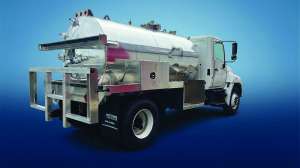
Pat Kelly depends on his fleet to place and service 1,000 portable rental units in northern Kentucky, southwest of Cincinnati. Four vacuum trucks and six service vehicles make up that fleet, and Kelly is proud of the regular attention it receives from his maintenance crew.
“We change the oil in our trucks every 3,000 miles and clean the vacuum pumps every two weeks,” he says. “We run kerosene and diesel through the pumps.” That work is all performed in-house. “We also pressure wash our trucks and dry them off every day, including cleaning the inside.”
Tire pressure usually gets checked once a month, but it’s not a regular maintenance item. “Usually only when we get a flat tire,” jokes Kelly.
Continue reading for free