QUESTION:
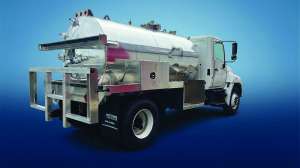
People tell me I have to maximize my load if I want to make any money during these times. But in an effort to carry bigger loads, I don’t want to risk having my truck run overweight. I saw a truck recently where they put a 1,500-gallon tank on a Ford F-550. Does that make sense?
Doug Jennings
San Jose, Calif.
ANSWER:
We want to educate and reassure vacuum truck buyers that they are making sound, viable decisions in the equipment they purchase. So let’s look at some facts.
GVW is the gross vehicle weight of a truck. When the truck is loaded and fully equipped, it cannot exceed the GVW rating — a figure that includes the weight of the truck. One issue in question is the actual weight of a gallon of waste. Some manufacturers are using the number 8 pounds/gallon. From that they calculate the weight of the tank, they add in the equipment, pump, trays, PTO, gearbox, etc., to come up with a total weight. They add that to the weight of the truck. Now they have a reasonably close number that represents the GVW.
There are a few areas where things might get skewed. First, the weight of the waste at 8 pounds/gallon is a guess. Water weighs 8.3 pounds/gallon. So you can see that if you have 1,000 gallons of waste, some manufacturers calculate that at 8,000 pounds. Some will calculate it at the weight of water, 8,300 pounds. And others will estimate 9 or 10 pounds per gallon just to play it safe. The precise maximum weight of a load is impossible to determine because wastewater will not necessarily weigh the same as clean water.
There is nothing worse than finishing a new vacuum truck, filling it up with water and finding out it is overweight. That is an illegal truck and fines for driving such trucks on the highway are very high.
So who is responsible when the truck goes out pumping, gets stopped on the way to the dump, and gets a high-dollar overweight ticket? This is another situation where the buyer needs to do the homework and make sure the delivered truck can’t run overweight. Occasionally customers at our shop want a truck that might run overweight when carrying a full load. We tell them truck owners could be subject to big fines if they get caught overloaded.
REDUCED LIFESPAN
We also tell them an overloaded truck raises other issues. The axles are going to get stressed. The tires are also going to pay a price for the extra weight. The truck engine is going to work harder when loaded. So one doesn’t have to be a rocket scientist to figure that this truck will not have the lifespan of a properly loaded truck.
When considering a new or used vacuum rig, first look at the tank material. Steel, aluminum and stainless steel have different weights but the weight of the tank itself can be calculated pretty close. So if you are buying a new unit, ask the manufacturer the weight of the tank, including connected trays, skids, and miscellaneous valving. One of the big selling points for aluminum is that it weighs approximately 40 percent of what the other two materials weigh.
One way to figure things is that if you’re trying to gain 100 gallons of waste capacity, you’re adding somewhere between 800 and 1,000 pounds. Has the lighter aluminum tank saved you enough weight to compensate for the extra weight you want to carry?
Another way to ensure your truck will run within its weight limits is to ask the manufacturer to test it with a full load. Or, if you are near a scale, fill the tank with water and have the complete unit weighed.
There is no reason to put an overweight truck on the market. Everyone deals with the same facts. There are no real advantages to running overloaded and overweight. So when buying, take a second look, do some math and discuss the issue with your manufacturer.
Continue reading for free