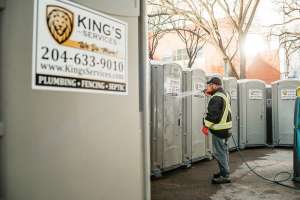

This month we are honored to address two questions from Alberto Guerrero with JW Craft Portable Restrooms in Naples, Florida. Guerrero was named the Portable Sanitation Association International 2019 Service Technician of the Year.
Jennifer Corrigan, owner of JW Craft Portable Restrooms, writes “Alberto is one of those people who are a stickler for detail and very humble about how it looks. In the past four years with our company, we have never received a single complaint about his route. He trains new hires for route positions and special event services. Alberto has been offered a promotion to supervisor on more than one occasion, but he prefers to be in the field working with customers.”
Question: Guerrero would like to know, “In what ways can a route service technician obtain job leads?”
Answer: Route service technicians serve as the eyes and ears of the sales department in the field. Take advantage of this daily opportunity to assist in increasing sales and growing your company.
Here are some useful suggestions:
Carry a supply of your company’s business cards with you. These can be given to your new customers on your route and left on sites where a portable restroom has yet to be ordered. Perhaps, in time, your name can also appear on the card as a way of strengthening the relationship with your current and future customers.
Always make a point of meeting the job supervisor, if possible, on the first day of service at the new job site. This introduction will make service easier and lead to increased customer satisfaction. At the conclusion of this introduction, ask if the company will be starting any other jobs in the area. This is a great way to get additional job leads while establishing an ongoing partnership with the customer.
As you drive your route, be aware of grading and clearing of land for new construction. “Look for dirt” is the industry expression for passing this information on to the sales team back at the office.
Stop and write down or snap a photo of permit information. The name of the company and its phone number will be on the permit, as well as the name of the building or the subdivision under development.
Observe these sites each time you go by for the addition of signage or a contractor’s vehicle. If you see someone and you have the time, stop and introduce yourself and give them a business card. Many times the person will eagerly agree to call your office and order a unit, as this is one less item they will have to handle in setting up their operations at the job site.
While sitting in traffic, look for construction, grading, remodeling or builder vehicles and make a note (photo) of names and phone numbers. These serve as leads for your sales staff.
As projects wind down, ask the supervisor where they are going for the next job. Hopefully you have built a relationship with this person and they will be eager to work with you and with your company again.
Question: Guerrero also asks, “What can I do to minimize clogs while servicing units?”
Answer: Having the pump hose clog with debris while servicing a unit is a time-consuming problem for service technicians. The best solution is to remember that waste should be pumped from the smallest opening in the pump system to the largest opening.
To better explain, experience suggests that the PVC wand coming into contact with the water and the waste should be smaller in diameter than the vacuum hose that ultimately connects with the waste tank on the truck. Similarly, the opening into the waste tank is larger in diameter than the vacuum hose.
Here are some additional tips to minimize clogs in the vacuum system:
- Even though the diameter of the PVC is smaller than that of the vacuum hose, only open the valve on the wand between one-half and three-quarters. This will further ensure any waste or debris that makes it through the wand will make it through the entire vacuum system.
- Before pumping, use the wand as a stirrer to determine if foreign debris is in the tank. If you do see debris, use your grabbers to remove the item before pumping.
- Should you get a piece of trash or debris stuck in the PVC wand, use a piece of rebar the length of the wand to extract the debris.
- If you get a clog in the vacuum hose, disconnect the wand and look at the connection with the hose. If the debris is stuck there, use long needle-nose pliers to remove the item. If the debris is stuck at the other end of the hose, remove the connection at the tank and use the pliers once again.
- If the clog is somewhere in between, you may want to disconnect the vacuum hose on both ends and reverse the ends so the clog can be dislodged by being vacuumed from the other direction.
- Consider assembling hose runs with clear spaces interspersed among colored bands so you can more easily observe where a clog is located.
Finally, once you resolve the clog and service the unit, make sure the area where you were working is clear and free of debris. The rule of thumb is that the area should be just as clean as it would have been if you had not been working on removing the trapped debris.
Continue reading for free