
We all want to start the new year out on the right foot. And coinci-dentally, two of the stories in this issue of PRO offer suggestions on how we can do just that. Our At Your Service and PRO Business columns blend two important topics — safety and effective communication — in an interesting way that should benefit our contractor readers in many ways in 2022.
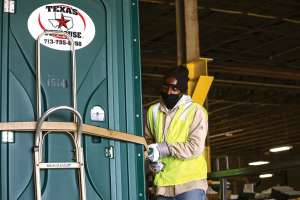
First, Jeff and Terri Wigley, our portable sanitation experts, talk about common safety violations seen in the industry and make suggestions for restroom companies to better encourage their crews to use the required and recommended PPE, or personal protective equipment, when servicing portable restrooms.
Secondly, writer Ken Wysocky has a conversation with leadership training guru Joseph Grenny about how co-workers can bring clarity to communication when pointing out safety or other transgressions in the workplace. The gist of his advice is to correct behaviors in the workplace in a constructive and respectful way.
The message in both columns is of timeless importance and should prompt necessary discussions in offices and yards of portable restroom operators everywhere. At the risk of offending any of our readers, I’ll start an uncomfortable discussion that will hopefully lead to healthier and safer conditions for frontline workers in our industry.
HE WON’T WEAR GLOVES
Since I became the editor of PRO 18 years ago, I have had frequent reminders of lax safety procedures among service providers. A lot of them have come in the form of photography for the magazine that shows workers not following established rules set forth by the Occupational Safety and Health Administration, or OSHA, as most people know the federal agency.
Mind you, the stories I am about to share do not, in my opinion, represent the safety record of a majority of our restroom companies. But even if these types of violations are only exhibited by a small number of PROs, they are worthy of an industry-wide discussion in an effort to stop them.
As recently as a few weeks ago, one of our photographers following a PRO on a route put his camera down at one point and asked the driver to don protective gloves while servicing a restroom. The driver told the photographer that he doesn’t wear gloves when holding a wand extension from the suction hose. However, the wand would be considered an extension of the hose and should be at all times handled with gloved hands.
Years ago, we encountered a PRO who had refused to wear gloves for any of the photos for a story, telling the photographer it would be dishonest to portray him with gloves because he never wears them on his routes. I recall this distinctly because I called the driver to hear his side of the story. “I’ll eat my lunch with a sandwich in one hand and the hose in the other,” he said, noting that he didn’t believe contact with waste was unhealthy.
Also, more often than I would hope to see, I receive photos showing workers on construction sites without hard hats, reflective vests or other recommended gear. This brings to mind a few construction site tragedies over the years that could have been avoided if all workers were dedicated to safely navigating these dangerous areas. One frightening example was a worker who was only walking from one pickup truck to another to talk to another worker, so he decided to leave his hard hat behind. A construction worker several stories up in a high-rise building dropped a wrench, which struck the worker below in the head, killing him.
When I have the opportunity, I enjoy riding along with a PRO while I’m shooting photos for the magazine. I have found it disheartening when my request for the technicians to wear safety gear sent them scrambling to find a pair of gloves or safety glasses, obviously showing this was not part of their daily routine.
PPE BAG
The Wigleys, who operated an Atlanta-based restroom company for more than 20 years and who have been involved with the Portable Sanitation Association International, are keenly aware of safety requirements for service providers. Turn inside and you’ll see their comprehensive advice on proper use of PPE and tips on how to ensure your crew follows the safety procedures you set out for them.
One excellent suggestion they make is to prepare a PPE storage bag outfitted for the needs of each worker. They say a zippered gym bag is a great choice to hold the hard hat, safety goggles, ear plugs and various types of gloves and other gear they may need. Then the workers are responsible for keeping the bag stocked with everything they need and moving the bag with them as they switch service vehicles. This seems to work better than having shared PPE somewhere in the truck, they say.
Setting up the procedures promoted by the Wigleys is one thing, but getting them to follow through with all the safety measures is another. That’s where the advice from training expert Grenny comes in. In the PRO Business story, Grenny stresses the importance of field workers holding each other accountable where safety is concerned.
Easier said than done, right? It’s not always a comfortable conversation to correct a co-worker. And often, that co-worker might not take kindly to being corrected. Grenny shares a roadmap to start these uncomfortable conversations … and stresses that changes in unsafe behavior are crucial to everyone coming home safe and sound at the end of the day. And isn’t that what it’s all about?
Bottom line, companies, even the smallest portable sanitation business, need to create a culture where it’s easy and nonthreatening to talk to each other about safety or how people treat each other in the workplace. He talks about delivering criticism politely and adopting an “attitude of gratitude” when someone fairly points out when you are in the wrong.
“When such a response becomes a cultural norm, it reduces the emotional stakes involved,” he says, boiling it down to a railroad analogy. “It’s kind of like getting a train started. It requires enormous energy at the beginning to get it started. But after that, it’s easy to sustain.”
I MEAN NO OFFENSE
If any of the PROs I’ve talked to about wearing gloves or hard hats on job sites are reading this, I’ll ask you to understand my questions are only meant to help you create a safer work environment and allow us to depict working conditions that meet guidelines set forth by OSHA. Just like you would do with coworkers, I bring up these topics out of concern for your well-being and to promote safety throughout the industry.
Continue reading for free