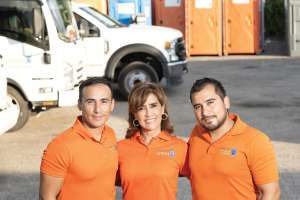
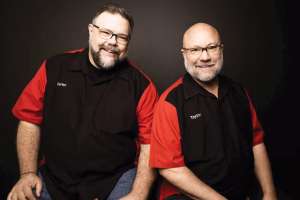
Karen Lau admits it was a humbling experience when she decided to help her son, Paul Lau, start a portable restroom business in 2015. Working as an executive assistant at a high-end car dealership, she wore business suits and heels for her day job, then changed into clothing more appropriate for driving a vacuum truck and cleaning restrooms after hours.
With savings and his mother’s sup-port, Paul started out with a 2007 Isuzu truck and 50 restrooms that he purchased unassembled. “For two years it was just the two of us,” says Karen about Porta Potty Togo in West Palm Beach, Florida. The days were long, getting up early to send and answer emails and scheduling, then going to a regular job and ending the day transporting and servicing restrooms. But based on a friend’s experience, they knew the portable restroom industry had great potential.
Karen knew about starting over. She was born in San Francisco and lived there until she was 6 when her parents moved to Guatemala, where her mother was born. In 2013, when Karen’s sons were old enough to be on their own, she moved to Florida. Paul moved there shortly after. Their focus on the goal to be independent and build their own successful business motivated them. Their work paid off and in 2018, Karen’s other son, Steve, joined them.
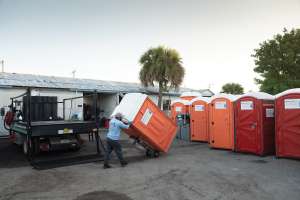
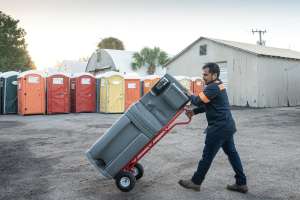
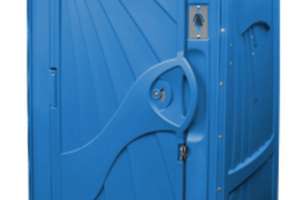
Porta Potty Togo has 11 employees and serves a wide variety of customers, from construction to high-end clientele in Broward, Palm Beach, Martin and Miami-Dade counties. In addition to 800 standard Satellite Industries restrooms, the business has 50 flushing PolyJohn units with sinks, seven restroom trailers, six from Rich Specialty Trailers and one from Lang Specialty Trailers; 60 Satellite hand-wash stations, 25 towable generic farm trailers; 25 Satellite crane units and 40 Satellite holding tanks. They also recently added fencing rental and trash container services and septic pumping.
1. Finding ways to get noticed
As a new business, the Laus knew they needed to make themselves noticed to attract customers. “We did a lot of door-knocking,” Karen says. “It was nonstop initiative from us.” She got up at 3:30 a.m. to send emails, initially targeting construction companies and then event organizers. From the beginning they offered extras to impress customers who would spread the word to others. “We made our event restrooms really nice. We would add a mirror, air freshener and nice, thick paper towels to stay on people’s minds,” Karen says.
But their service goes beyond nice restrooms. “Our logo is a smiley face. We sell an emotion. Our philosophy is to have a friendly approach to clients and provide great service. We take pride in caring for their particular needs,” Karen says. That includes everything from the right color restrooms to having an emergency number 24/7. Also, being Hispanic has its advantages. “There are lots of Hispanics in south Florida, and they like that we are bilingual. They are more comfortable placing an order,” Paul says.
2. Making the right investments to grow the business
“In 2018, business was remarkable and we got many large events,” Karen says, noting Palm Beach has many opportunities. She recognized her advantage of being a minority- and women-owned business and reached out to new clients. Workers paid attention to details to keep those clients, and the Laus invested in high-end restroom trailers.
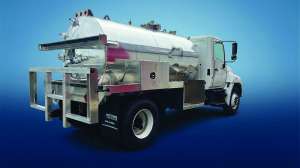
“We always say yes; we will find a way,” Paul says, recalling his first 30-unit event for a Seminole tribe casino. It barely made a profit, but it opened doors, and costs went down as the business grew and they invested in larger locally made trailers to haul the units. They also invested in vacuum trucks that are the appropriate size for the areas they serve. They range from three Isuzu trucks with Imperial Industries 650-gallon waste/300-gallon freshwater stainless steel tanks and two Isuzu trucks with Crescent Tank flatbed 650-gallon waste/300-gallon freshwater steel tanks; a Ford F-550 with a Flowmark 1,100-gallon waste/400-gallon freshwater aluminum tank; and a Ford F-750 with a Flowmark 1,500-gallon waste/500-gallon freshwater aluminum tank. All have Masport vacuum pumps and NVE washdown water pumps.
3. Turning obstacles into opportunities
During COVID-19 and lockdowns, portable restrooms were considered an essential service, and Porta Potty Togo was ready to respond. With precautions in place, employees continued to work as usual and no one contracted the virus. “We were honored to serve (then President Donald Trump) at Mar-A-Lago,” Karen says, along with many other customers.
With their main yard in West Palm Beach, they were able to efficiently offer daily service to another important sector — hospitals. “We rented all of our trailers for medical staff and teams ready for emergencies at overflow sites,” says Karen. “We went back and forth to restock and bring water as many times as we needed to.”
Early on hand-wash stations were in high demand and manufacturers couldn’t keep up building them. “So we started building hand-wash stations,” Karen says. They placed two 55-gallon barrels together with the top barrel with freshwater and a faucet at the bottom that flowed into a sink and drained into the water barrel on the bottom. They built 75 units to meet demand. Not designed to be a long-term solution, the Laus replaced them with commercial wash stations as they became available.
4. Learning to manage logistics
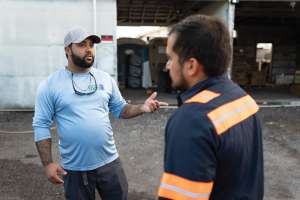
When your business encompasses a 300-mile radius that includes large, traffic-congested cities, logistic planning is essential. Experience and technology help the Laus operate their business efficiently. In addition to their main yard in West Palm Beach, they have yards in Miami and Port St. Lucie. Steve coordinates with employees at each site and visits them regularly to check on supplies. With everything on the cloud and using Hellotracks routing software, Steve can see where his drivers are from his truck or the office.
While plans always look good on paper, he leaves some slack in the schedule when drivers are servicing the busiest areas. “Sometimes people don’t answer their phone for portable restroom placing instructions. Or places are locked. It’s most crowded in Miami, so I usually schedule 25-35 stops per route,” Steve says, compared to 35-40 stops on other routes. He also accounts for travel time in more rural areas of their service area.
Paul incorporated technology and automation within a year after starting the business. He worked in several logistics jobs after college. “The thing that relates the most was I worked for a vending company in South Florida, managing routes for technicians,” Paul says. The concept adapts well to Porta Potty Togo’s service routes and the software is intuitive and easy for everyone to understand, he says.
He’s also incorporated automation to address customer complaints correctly and timely with Ring Central software. And to ensure customers can access help, the business website offers a Chat Live icon, and phones are set up so someone will answer within 30 seconds.
5. Filling all the niches with family members
Paul is the financial numbers guy, paying attention to current work trends and looking ahead to know when to invest in equipment that will be needed. There is no down time in Florida, so it’s an ongoing challenge. “I’m also a people person, and I try to sympathize and have good communication with employees, which is one of the greatest challenges for everyone,” Paul says.
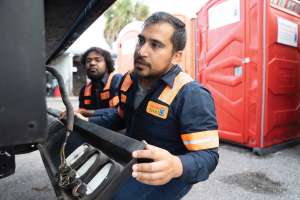
Steve’s experience managing a logistics operation of fresh produce deliveries in Guatemala helps the day-to-day business of scheduling and handing sales and, he has natural mechanical aptitudes. “I’m the problem solver, the handyman, so it helps when breakdowns happen and time is of the essence,” Steve says.
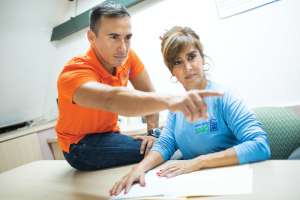
Karen constantly networks, joining contractor associations and corporate and city groups. She takes care of data processing and necessary certifications as part of her office work. “I’m the dynamo, a go-getter all the time and push toward the goal not to be afraid to challenge ourselves to go further,” Karen says, adding, “We do planning together.”