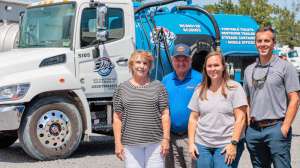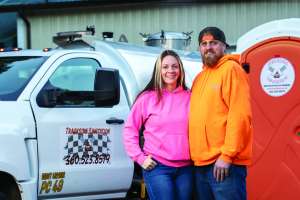

It was a Saturday morning in Albany, Oregon, and Michelle and Daniel Stotts were in a bind. They were attending a motocross event with their blended family, including their racing son Jackson, when they realized their RV’s waste tank was full.
The Stotts called every pumper in the area for help. But the companies who answered the phone were either unwilling to come out or wanted to charge $300 for the service.
“Packing up everything and trying to take the trailer somewhere to dump it is unrealistic when your son is in races all weekend,” says Michelle. They didn’t have the funds to pay for the other company to pump their tank, so they decided to “rough it out.”
That was August 2024. “Daniel got mad and said, ‘We should just buy a truck, just follow the racing circuit and do these pumpouts ourselves,’” Michelle recalls. “And I was like, ‘Why have we not thought of this before? So we bought a truck and we were just going to follow the race circuit, make some extra money to pay for racing fees for our son and help other people in the motocross community by pumping out their trailers for super cheap — but then it became a business.”

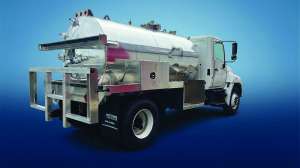
Specifically, in November 2024, the Stotts bought a 2023 Chevy Duramax 6500 diesel with a 1,000-gallon wastewater tank and a 500-gallon freshwater tank. The Chevy came from Imperial Industries, via Erickson Tank & Pump of Quincy, Washington, as the vendor.
The Stotts had some experience in the industry as their previous jobs were working for a national rental company. They left that company and launched Trackside Sanitation that now serves Lewis, Pierce and Thurston counties. The family’s strong ties in the region, plus their commitment to professional customer service and fair pricing, has fueled their rapid growth.
Their fleet has since expanded to include a Ford F-550 flatbed service truck with a Satellite slide-in tank (300 waste/150 fresh), and a 2007 International pumping truck with a 1,600-gallon tank and Masport pump from Erickson Tank.
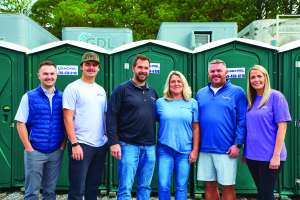
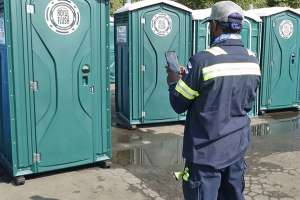
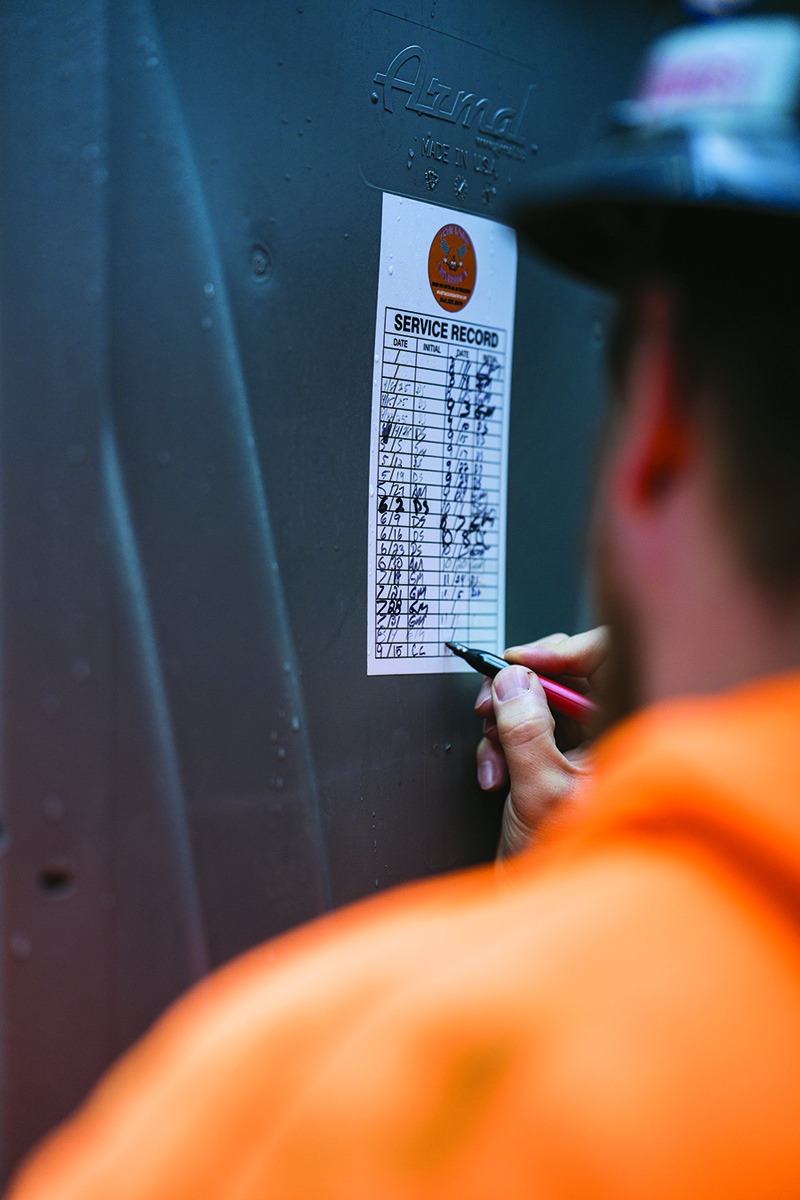
As well, the Stotts have gone beyond trackside pumping services — with help from their six children — to pumping out septic tanks and renting roughly 140 portable toilets for any situation. Their lineup includes Armal and Satellite units for construction and outdoor events, plus holding tanks and wash stations.
Five Takeaways on how Trackside has Found Success
1. Service a Gap in the Market
Michelle and Daniel Stotts positioned Trackside Sanitation for success by identifying a problem and fixing it. Drawing on their own experience, they realized that the motocross and event circuit was underserved. By buying a truck and offering services others wouldn’t, such as driving through race pits on Sundays to pump RVs on site, they built loyalty instantly. “We’ll go down there usually before the race starts and we give out flyers letting people know that we’re there all weekend,” Michelle explains. “If somebody wants to use our services, we’re here for them.”
2. Invest in Reliable Equipment
As veterans of the rental and restroom industry, the Stotts knew that having reliable equipment is paramount to customer satisfaction. They built their fleet with specific goals in mind, and made sure that their initial workhorse, the 2023 Chevy Duramax, was up to the job. They then diversified their fleet to include a Ford F-550 tanker for lighter work and a 2017 International for heavier septic jobs. This mix allows Trackside to cover everything from narrow trackside trails to residential septic pumping efficiently.

3. Marketing Can Be Fun
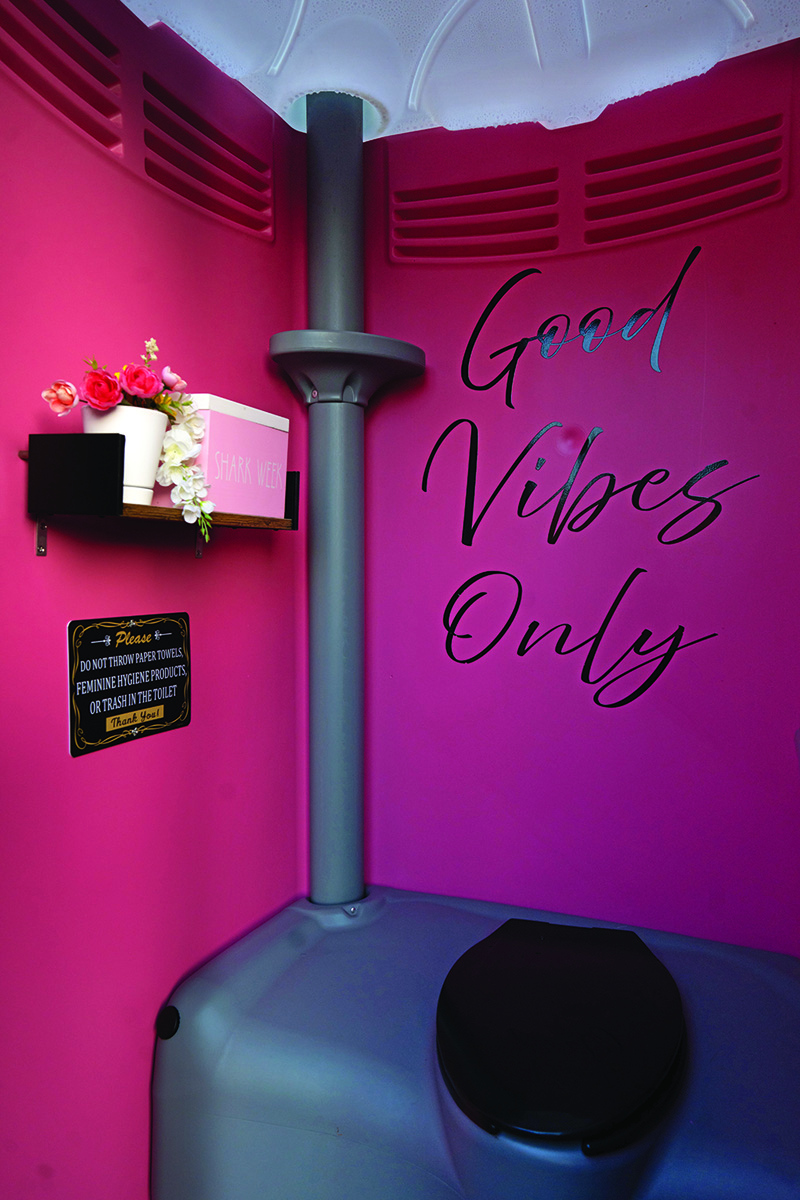
Portable sanitation is rarely described as “sexy,” but Michelle is working on changing that. The company’s standout product is the “Bougie Loo,” a pink Satellite Maxim portable toilet outfitted specifically for women. It features floral accents and a kit with feminine hygiene products. “I’m telling you, when women see the Bougie Loo, they’re like, ‘Oh my gosh, this is awesome. I want to use it,’” Michelle says. “We’re bringing sexy back to sanitation.” As well, Trackside is using a humor-driven marketing strategy with hashtags like #PoopThereItIs and #ShitHappensHere, encouraging customers to take selfies with their porta potties.

4. Community Over Corporation
Trackside Sanitation is based in a region with a seasonal economy. Mindful that people’s situations are all different and that money can be tight, Michelle and Daniel Stotts do their best to treat their customers as neighbors, rather than the reverse. So, unlike their large national competitors, Trackside offers flexibility that reflects the economic reality of their community. “For instance, we offer payment plans for when people need septics pumped when they’re on limited or fixed incomes,” says Michelle. Trackside Sanitation also supports the sport that launched them. The company offers track discounts and has a goal to eventually sponsor a new motocross rider every year.
5. Learn Your Limits
Rapid growth can be exhilarating, but it comes with a cost. “We had a lot of growth in this last year, and it just kind of put us in a spot where we weren’t quite ready for it to slow down as fast as it did due to the seasonal shift,” Daniel admits. Michelle adds that, for new owners, establishing a work/life balance is key, especially for families with kids. “Setting hours versus just allowing everything to intermingle is vital,” she says. “It’s OK to take a break. I make a point to inform our customers of any holidays or time away through mass emails and on Facebook though our page and local community pages. I also update our phone message to reflect it. I still answer emergency calls. I’m also on top of responding when I am back in the office. Most people respect the boundaries we set. With that being said, during the summertime we don’t really get breaks as is standard in this industry, for sure.”
Continue reading for free