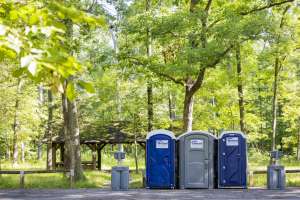

Each day Google Alerts with the latest portable sanitation news trickle into my inbox and, unfortunately, each year the number of alerts reporting sexual assaults occuring inside portable restrooms grows. You can read a few of those reports here: “Rapist Pushed Woman Into Portable Toilet at Beer Festival Before Launching 'Terrifying' Attack,” “Man Sentenced for Portable Toilet Sexual Assault at BottleRock and East Bay Street Fair,” and “Woman Sexually Assaulted in Portable Toilet During Foo Fighters Concert at Wrigley Field: Police.”
How to discuss this with you, the portable sanitarians trying to keep these event attendees safe and clean, has plagued me for a while. Wrongdoers who take advantage of the basic necessity of bathrooms are heinous, and stopping every single would-be criminal is impossible. However, there are common sense steps you can take to better protect end users, some of which may already be part and parcel of your routine.
1. Prep Service Techs
Service technicians are the eyes and ears of your portable restroom company. During routine cleanings at special events, techs should inspect units for broken door latches and locks, illegally placed surveillance devices and other signs of illicit activity. Add these items to your service checklist, and soon enough they’ll be habitual. Be sure to go over the chain of command for reporting anything suspicious.
If service technicians are attending restrooms at special events, stress the importance of locking down ODD portable restrooms — overflowing, dirty or damaged restrooms. Vacancies provide opportunities for would-be criminals. Also consider a one-user-in, one-user-out policy for all regular units, and task attendants with enforcing it. This policy would not apply to handicap-accessible or family units, where individual users may need and are often entitled to assistance.
2. Review Security
After securing a bid for a special event, call the event organizers and set up a meeting to review security measures and policies: Will security or local authorities be present? Who is in charge? What is the chain of command in an emergency? What about non-emergency points of concern?
If your restroom attendants are expected to be on site during the event, will there be security nearby? Where are medical personnel stationed? If restrooms are to be placed in parking areas, outside the event space, will they be secure? Is there an alcohol concession cut-off time? What is the carry-in policy? Is there CCTV on site, and are the cameras appropriately placed to balance the safety and privacy of event attendees?
Debrief your employees on what you find out, and share your safety policies and procedures with the event organizers. During setup or day-of, introduce yourself and your technicians to organizers and security staff upon arrival, and take the time to walk the event space and familiarize yourselves with the layout.
3. Utilize Technology
Consider the technology add-ons your portable restroom operations already have, or that you have been considering adopting. Solar lights in portable restrooms may feel like a luxury to some, but are a valuable safety measure to others. You may already place stickers with emergency hotlines in your units, consider adding one for the local sexual assault hotline or even the non-emergency number for the local sheriff’s department. Or ask large-event organizers if they offer an online complaint desk and would like to display a QR code connecting users to it.
Track your units. With the proliferation of GPS technology, tracking units is easier than ever. It’s also a safety precaution. Unsecured units are targets for pranks as well as misdeeds, and tracking units provides a way to keep an eye on each individual unit without providing one-to-one coverage.
If you provide individual portable restroom rentals for campsites at music festivals, lock them down. Secure the restroom with a lock and specify in rental agreements that only registered campsite users are allowed access.
4. Advocate for More …
Sell safety. Yes, I said sell. Use safety to advocate for placing more portable restrooms, urinal stands and hand-wash stations. A better attendee-to-unit ratio will not only make your service technicians happier, but can also alleviate congestion, making for a safer atmosphere.
Less congestion improves sight lines and lessens people pressing in on one another. It’s that jostling crowd that can become cover for bad actors like the beer festival attacker in the first report. I do not believe that segregation of the sexes via restrooms is necessarily the answer to user safety, but dispersing crowds is a valuable tool. Insist on on-site attendants at events of a certain size to better monitor restroom and crowd conditions.
Additionally, take a hard look at your roll-off services. If more fencing is needed at an event space, pitch it to organizers. Would portable blue-light phone beacons or other emergency call station equipment be a worthy investment? For a portable restroom company servicing large-scale special events, they might be. As crude as it may be to admit it, when safety is profitable it remains top of mind.
5. See Something, Say Something
Don’t be a bystander. You’ve already gone over event security and the chain of command with your employees, so now put that knowledge to work. If you see something that looks off, say something.
You don’t have to be a mandated reporter to say something — although some state and federal contractors are mandated reporters, check your contracts — and saying something isn’t only about sexual assault prevention. Sometimes it means heading off a medical emergency, or alerting security when the mood of the crowd grows heated or impatient.
Saying something does not have to be confrontational. It can be as simple as you or your employees passing information up that chain of command. Stress this to your service techs and route drivers at your morning tailgate meetings. You don’t need them to be superhumans in the face of danger, but don’t expect them to be bystanders either.
You can’t stop every wannabe criminal or bad actor. However, you can make it more difficult for them to succeed while protecting both your customers and your equipment. Evaluate the safety precautions you’re already taking and improve where needed and, most important, keep the conversation going. Make safety a selling point in your special events bids; it’s good business.
Continue reading for free