
Two of the questions that came in this month involve route unit servicing. In June, our residential and commercial routes are becoming busier due to warmer weather and longer daylight hours.
Question: Our routes are really growing right now, and we need to concentrate on efficiency in servicing this growing number of units. Please share tips to reduce delays at the job site and thereby increase our efficiency?
Answer: Service efficiency, while maintaining high quality customer satisfaction, is a worthwhile goal. Keeping in mind that there will always be delays of some sort on the typical route service day, attempting to minimize these situations will benefit your company. Here are some tips to consider:
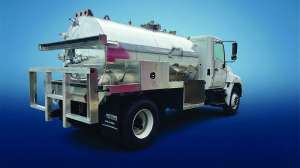
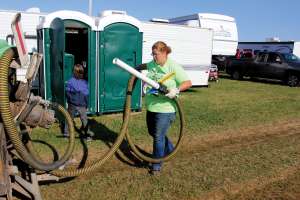
Route service truck
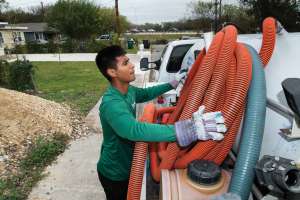
Carry an extra pump hose and plastic wand (stinger). In the event of a major clog, you can simply replace the hose and continue servicing. Using the same logic, if the wand becomes clogged, a replacement will allow the service technician to continue working without delay. In other instances, the wand, being plastic, can crack or break and a backup eliminates additional work to repair.
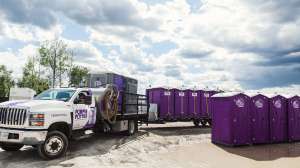
When possible, carry an extra restroom on the truck. If there is damage to a unit in the field, it can be immediately replaced, and the route can continue without much disruption. This also eliminates another trip to the location and keeps a unit in service for the customer.
If an extra unit cannot be loaded on the truck, remind the service technician that any units that are scheduled to be picked up can also serve as replacement units. Although this is against many PROs’ policies of returning all units to the yard to be thoroughly inspected, cleaned and serviced before being delivered again, this exception to that policy can save time.
Parts and supplies
Including an extra toilet seat, door latches and hand sanitizers on each service vehicle will be of great use in the field. These quick repairs will restore the condition of a unit and eliminate the need for a swap-out or another trip to the job site to repair.
A small section of lightweight chain and several extra locks will also be of value if a unit is in a position where wind damage or similar circumstances could impact it. Being able to chain a unit to a fence, pole or tree will reduce tip-overs, which can produce lengthy delays on the service route.
If your company uses liquid deodorizers, consider carrying a quantity of deodorizer pods in a sealed plastic container should the liquid deodorizer run out or be spilled.
Equipment placement in the field
The basics of unit placement should be discussed with employees on a routine basis. A sound practice is to place units on level ground, away from heavily congested areas, against walls or trees, and not behind locked gates where we do not have either a key or a combination. Securing units to avoid tipovers is important as well.
Place holding tanks using the same practices. Another tip is that if the tank can be placed where the disposal cap is at the lowest point, pumping of the tank is much quicker and the tank can be completely emptied.
One tip recently shared with us involves crane units. How many times have we driven up to the job site on the same designated day at around the same designated time and the crane unit is still on the top of the building? The PRO shared that their company always delivers two crane units to the site although they only charge for the service of one. One crane unit stays on the building until the day before the scheduled service.
At that time, the second crane unit, which has been locked and secured on the ground all week, is switched out with the used unit. That unit is then chained and put out of service. When the route service tech comes the next day, there is one locked crane unit on the ground that can be easily serviced without delay. After servicing, it is then locked and the route service tech continues on.
The “10-foot rule” is an approach some PROs use, placing sinks and sink stations no more 10 feet from a unit or a bank of units. Being able to pull to a point where both the unit and the sink can be serviced without moving the service vehicle is an efficient timesaver.
Traffic reports: The 511 system or other sources
At certain times in the route, travel on interstates, major highways or busy streets may be required. Keeping apprised of traffic conditions is a way to increase efficiency. In today’s world there are a multitude of “apps that can do that.” One system we would also like to highlight is the 511 U.S. Department of Transportation and Federal Communications System of sharing traffic and road conditions on a nationwide basis that began in March 1999. Here in Georgia, we have the 511GA app that drivers use to access traffic information from all areas of the state. Avoiding traffic jams is a major efficiency bonus.
< • >
Question: Our company strives to constantly improve our level of service. We have considered some type of unit inspection program in the field. What suggestions do you have to structure such a program?
Answer: Ensuring the route service technician is providing good service, the opportunity to inspect the equipment and its placement in the field, the ability to solve potential problems that may surface and interaction with the customer on site is invaluable. Building that customer relationship will ensure continued jobs in the future and hopefully inspire that customer to refer your company to others.
As with company policies and procedures, performance plans and other processes, once it is in writing it becomes “official.”
General suggestions to include on a written form for portable restroom inspections would include:
1. Overall condition of the unit
2. Specifics as to cleanliness and structural condition of the door, walls, base, roof, tank, urinal, tissue holder and sanitizers, if applicable.
3. Having the information on when the unit was last serviced and its service history; and is the unit being overused?
4. Is the unit in the best location for use and for service? If not, make suggestions for better positioning.
5. Are the outside decals in good condition or do new decals need to be applied?
6. Other?
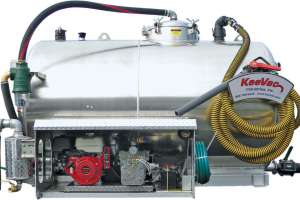
It would be ideal to have the person doing unit inspections driving a company truck. In fact, the dream scenario is to have the inspector in a truck with a small vacuum tank where units could be serviced if needed, as well as the ability to carry at least one unit that could be switched out or added as an additional unit on the job site. Using this model, the inspector can also be the problem-solver.
Regardless of the vehicle that is used to conduct inspections, the secondary responsibility of the unit inspector should be to look for future job sites along their journey.
Providing driver route feedback, increasing customer satisfaction and increasing sales leads are all advantages of a unit inspection program.
FINAL THOUGHTS
The busy season is here! The ability to maximize efficiency is good for employees and customers alike. With a field inspection program, you can provide excellent customer service while prospecting for new jobs along the way.
We invite you to share your ideas and experiences in these areas with us. We will then share them here in a future column.
Continue reading for free