Question: Our company is always looking to improve our processes and procedures wherever we can. For some years now, we have used standard preprinted pre-trip and post-trip inspection reports that we purchase from an online trucking driving and safety program. What are your suggestions and ideas for improvement in this important area?
Answer: Pre-trip and post-trip inspections are much more than simply a required daily task. Understanding the reasoning behind this requirement and tailoring these forms to meet the needs of our industry can be an important enhancement to your company’s safety program.
BACKGROUND
The Federal Motor Carrier Safety Administration is the governmental body that regulates the requirements for both the daily pre-trip and the daily post-trip inspections for all commercial vehicles. FMSCA 392.7 describes the requirements of the pre-trip inspection while FMSCA 396.11 describes the post-trip. These documents for each vehicle are to be kept on file for a minimum of 90 days at the company’s location.
According to the federal agency, the purpose of the pre-trip is for the driver to be satisfied that “the vehicle is in good working order and in safe operating condition.” If the driver finds something wrong, the problem must be fixed before the vehicle can be sent on the road.
Pre-Trip Inspection
- The basic pre-trip inspection suggested steps include:
- Check the overall appearance of the vehicle upon approach.
- Review the previous post-trip inspection report.
- Conduct a walk-around inspection. Check the tires and the rims. Check the coupling device or trailer hitch, if applicable.
- Check headlights, auxiliary lights, flashers and reflectors.
- Check stop lights and turn signals.
- Check the engine compartment for signs of leaks or damage. Check the various fluid levels.
- In the cab, adjust the seat and mirrors. Test the windshield wipers and the horn. Inspect the interior.
- Check the service brakes and the parking brake. Check the air-brake system (if applicable).
The pre-trip inspection allows the driver to begin the route with a properly operating and safe vehicle.
Post-Trip Inspection
The purpose of the post-trip inspection is to inspect all the same areas, as with the pre-trip, but to allow truck maintenance personnel to resolve issues before the truck can safely return to the road.
The post-trip report must be signed by the driver and presented to the appropriate manager or supervisor for issues to be verified and confirmed.
This describes the traditional process of pre- and post-trip inspections.
Customize your checklists for our industry
Here are suggestions for additional inspection items:
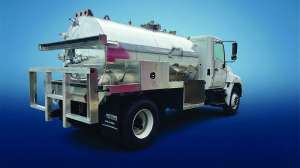
- Vacuum pumps – Add items to ensure that the vacuum pump is functioning properly and that the pump oil level is sufficient.
- Sight glasses – Are the sight glasses on the tank in good repair or are they cracked, chipped or loose?
- Trailers – Add a section on your company form for hauling equipment. If the forms are being completed by a route service technician, the inspection points for trailers can be omitted.
Examples include:
- Unit transport trailers – Inspection questions could include: Is the trailer hitch connected and in good repair? Tires? Brakes? Lights and reflectors? Is the trailer tag current? Are units properly secured?
- Restroom trailers – Suggested inspection items: trailer hitch? Brakes? Lights and reflectors? Steps secured? Current tag?
Add checklist items for important documents
Consider including items for “proof of insurance” and “valid registration” for trucks and for any trailers that might be attached.
Other important safety items
Include a fully stocked first aid kit and a currently inspected and working fire extinguisher. These items are important and need to be fully operational.
Consider automating pre-trip and post-trip inspection reports
When we look at the volume of paper generated by these inspection reports — two pages per truck per day per week and per year — and having to file and to maintain all inspections for the past 90 days, automation is an attractive option.
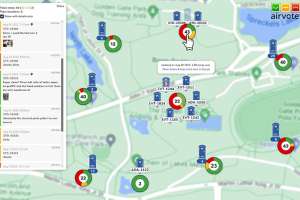
Your software provider may include an option for the pre-trip inspection to be completed on a company phone or tablet. All data can be summarized and analyzed at one time. This is especially important for the post-trip checklist as a complete picture of the repairs needed for the entire fleet can be in one report for maintenance personnel. By archiving data beyond 30 days, research can be made on repair data for specific vehicles. Perhaps a certain vehicle has a problem only in the heat of summer or in the dead of winter.
Automation also minimizes human error. We have heard countless stories where the route service technician wrote a note concerning repair that was either not legible or perhaps it was written on the back of the inspection report, and no one saw it.
Photos of repair items can be integrated into these reports, further increasing the efficiency and enhancing the communication of issues.
Utilizing software products can also allow PROs to see how long these inspections are taking to be completed. Are pre-trip inspections being done too quickly in the mornings? Are post-trip inspections taking too long at the end of the day and not giving maintenance personnel enough time to begin repairs? This data can lead you to develop company standards in these areas, further increasing efficiency.
Depending on the software you use and your company’s level of desire to ensure these reports are completed, inspection reports can become integrated into your company’s automated workflow. There are systems where the pre-trip inspection report must be completed and submitted before that day’s route appears on the service technician’s device. Similarly, in the afternoon, the post-trip inspection report must be completed and submitted before the time clock sign-out program is activated.
In the event of an FMCSA audit — perhaps associated with an incident — your company has 48 hours to produce these pre-trip and post-trip records. Automation will minimize the level of stress in producing this information.
Additional reports
We want to remind PROs that every commercial vehicle is required to undergo periodic inspection at least once per year per FMCSA 396.17.
If you have a vehicle pulled over and inspected by the federal or state Department of Transportation, that report needs to stay on file for 14 months. If the truck is found to have minor issues, you have 14 days to correct and to respond to the DOT. If the vehicle is declared OOS, out of service, you have specific steps and actions to take to correct this situation.
FINAL THOUGHTS
Make pre-trip and post-trip inspections a “want to” in your company and not a “have to.” These inspections are vital to your overall safety program. Employee safety, the safety of the general public and equipment safety can all be ensured by making this an essential, easy-to-achieve part of every day.
Continue reading for free