“We essentially learned how to generate more revenue with the same services,” he notes. “It was definitely a make-lemonade-out-of-lemons moment.
“It was a month or two before we could finally see what revenue looked like and realized it wasn’t going to be a colossal tragedy,” he continues. “But for that first month or so, we just didn’t know. I don’t know if I ate or slept for a month straight. It was quite an experience.”
Helping Hands
The sailing has been smoother since then. Based in Hudsonville, about 15 miles southwest of Grand Rapids in the southwestern corner of Michigan, the company has grown considerably since then, bolstered by business knowledge Knoper gained during roughly 15 years of working in financial services and as the owner of an insurance agency.
An emphasis on building a solid company culture, making investments in newer productivity-enhancing equipment, implementing a strategic pricing strategy and improving productivity and efficiency also aided growth, he says.
Another key to growth: The two previous owners — Randy Van Rhee and his son, Ryan — stayed on board and provided valuable insights. In fact, Ryan Van Rhee still works for the company as a lead foreman for pickups and deliveries, Knoper says.
“In addition, our PolyJohn and Satellite sales reps also were very valuable in helping me understand the industry,” he says. “Even my competitors in the area were great. They all reached out and gave me advice when asked.”
Today, construction-based rentals generate about 40% of the company’s revenue, while municipal rentals (at parks, schools, recreation facilities and so forth) produce about 30%, followed by special events and agricultural customers at around 15% each, Knoper says.
Career U-Turn
Knoper’s entry into the portable sanitation industry stemmed from a chance encounter at a Christmas party he attended with his wife, Tricia, in 2019. While talking with one of Tricia’s colleagues, Knoper mentioned that he was ready to try something different.
“I needed a change of pace,” he recalls. “My job was getting mundane and boring.”
The colleague told Knoper the owners of Kerkstra Portable Restroom Services were selling the business and Knoper was immediately intrigued.
“I’m not sure why it seemed so attractive, especially since I didn’t know a doggone thing about the industry,” he says. “Then on the way home from the party, I saw several Kerkstra restrooms — it was so bizarre. And from then until March of the following year, buying that business was the only thing on my mind.”
What made Knoper think he could succeed in running a business he knew nothing about?
“It wasn’t cockiness or overconfidence,” he says. “I just know I’m good at evaluating systems and creating sales processes. To me, it just came down to how I can relate to employees and get them to buy into how I want to change things.”
“Sometimes you just feel guided in a certain way,” Knoper adds. “Everyone I mentioned it to told me not to do it. But it’s hard for me to say no to a challenge.”
Starting From Square One
Knoper started the company’s transition to new ownership by meeting individually with employees at the company’s three locations in Hudsonville, Muskegon and Belding — first with the shop manager at each location and then with route drivers. The goal: Ease any employee concerns that typically arise when new ownership comes in.
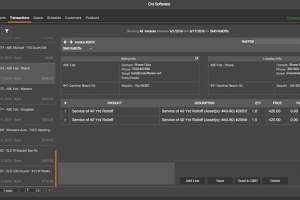
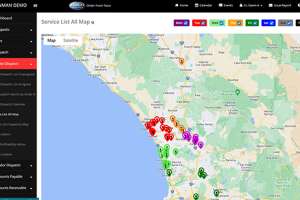
He also focused on investments in modern technology and equipment to improve efficiency and productivity. As an example, drivers used to create their own route on spreadsheets. But Knoper invested in a customer relationship-management platform from CRO Software Solutions with routing, billing, invoicing and dispatching capabilities.
The CRM system includes an app that technicians can log onto and use to message customers if there’s a problem, such as a locked gate or a locked restroom. That allows them to become problem-solvers, not a dispatcher.
“Before, drivers would call the office if there was a problem, and then the dispatcher would have to contact the customer, possibly wait for a return call, then eventually call the driver back and probably reroute him,” Knoper continues. “This system saves dispatchers a lot of time.”
“It’s hard to quantify, but I can tell you it has helped us be more productive and efficient by freeing up office people to do more in handling sales calls,” he adds. “That’s what drives sales — not playing middleman between, say, a building contractor and one of our technicians.”
Building Brand Awareness
Knoper also focused on marketing, particularly on brand awareness.
“When people think about portable sanitation, I want Kerkstra to be the first name that comes to mind,” he says.
This was achieved through Google Ads and social media, as well as sponsorships of community organizations, ranging from sports teams to special events.
“It’s pretty rare for an event to occur in our area without our name on it, from hockey and baseball teams to art festivals to 4-H clubs,” Knoper says. “We put our name on as many things as we possibly can.”
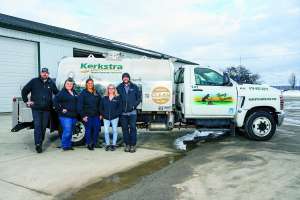
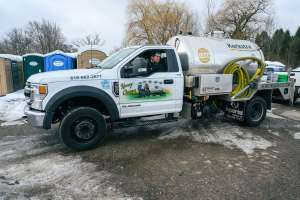
The company’s 37 vacuum trucks also prominently market the company. They feature hand-painted, whimsical-looking rural murals on the cab doors, as well as a nickname for the truck. For example, one mural depicts a bear chasing a bee with the name “Honey Chaser” accompanying the mural.
The previous owners hired a local artist, Mark Oesch, the owner of Mark Oesch Signs & Lettering, in 1996 and he still paints the scenes today, Knoper says.
“The murals make the trucks unique,” he says. “And when you have so many trucks rolling around every day, people tend to notice them. Everyone knows it when they see a Kerkstra truck go by — they don’t even have to look at the name on the tank.
“If you treat your truck like a billboard, you are a billboard.”
The company also boosts brand awareness by providing technicians with uniforms and paying to have the shirts and pants laundered and pressed.
“It presents a level of professionalism in an industry that doesn’t have the cleanest reputation,” Knoper explains. “It helps create a level of trust that we’ll provide exactly what we say we will on the side of our truck tanks: dependable and clean service.”
Equipment Upgrades
The company owned 26 vacuum trucks when Knoper bought it. Today, the company runs 37 trucks, and only 12 of the original trucks remain, he says.
“We upgraded our trucks with better tanks and better washdown pumps from Pumptec [X-Series pumps; 5.4 gpm at 100 psi],” he says.
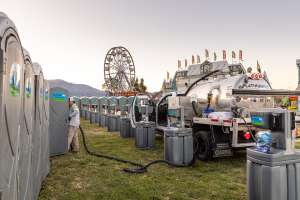
Two dozen of the trucks are Ford F-550s, used primarily for monthly rentals. Most of them feature 800-gallon waste/400-gallon freshwater aluminum tanks from Imperial Industries; five of them feature 700-gallon waste/500-gallon freshwater aluminum tanks. All of them are equipped with National Vacuum Equipment 304 vacuum pumps except for two that feature pumps from Masport.
To service special events, the company relies on Freightliner and International chassis equipped with 1,000-gallon waste/500-gallon freshwater aluminum tanks, except for one with a steel tank, all made by Imperial or Progress Tank. All of the trucks feature NVE 304 pumps except for one equipped with an NVE B250 blower, Knoper says.
The company also has a septic tank pumping division called Lakeshore Septic. Technicians service customers with a 7,000-gallon aluminum vacuum tanker pulled by a Freightliner tractor cab and two Sterling trucks equipped with 4,600- and 3,600-gallon steel tanks from Imperial. They both feature NVE Challenger 887 vacuum pumps.
Kerkstra owns about 5,500 restrooms, a sizable increase over the roughly 3,800 restrooms the company owned when Knoper bought it. Most of the restrooms are from PolyJohn Enterprises Corp. and used for special events; the rest, made by Satellite, are used primarily for construction sites and other monthly rentals.
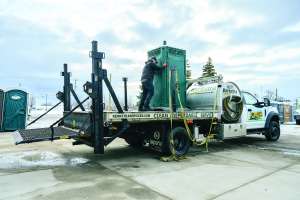
In addition, the company owns about 200 hand-wash stations from Satellite and 24 restroom trailers from A Restroom Trailer Co. The company uses cleaning and deodorant supplies from Walex Products Co. and also owns one Laxi-Taxi flatbed trailer from F.M. Manufacturing, which holds 20 restrooms.
Improving Profitability
Knoper also devised a pricing strategy that rewards customers that rent larger numbers of restrooms — usually construction contractors — with what amounts to a volume discount. This also encourages these larger customers to rent more restrooms, as opposed to using two or three different restroom providers, he says.
In turn, this also promotes better route density, which reduces expenses such as fuel and wear and tear on trucks while at the same time improving productivity through increased route efficiency, Knoper notes.
“This pricing segmentation [between larger customers and customers that rent only a few restrooms at a time] helped us concentrate on more efficiently serving larger accounts,” he explains. “And if we give them a price break-point at certain amounts of units rented, it behooves them to expand that relationship with us instead of using other restroom companies, too. It solidifies those business relationships.
“And with more units on a job site, it’s just more efficient,” Knoper continues. “Route density is such an extremely important number in terms of profitability because you can clean more restrooms per day.”
Knoper estimates that on average, his technicians clean one restroom for every 1.2 miles they drive. That represents about a 58% decrease compared to when he bought the company five years ago; at that time, drivers averaged about 2.4 miles of driving for every restroom cleaned, he says.
“Driving only 1.2 miles for every restroom cleaned is a fantastic number for route density,” he says. “Some of our guys might clean 70 restrooms per day, but they’re only driving about 75 miles to do so. That’s pretty low mileage for that many restrooms.”
Moreover, longtime customers — those that have used Kerkstra for years and years, if not decades — remain locked into the existing pricing structure that Knoper inherited.
Why? “You can only increase rates for customers like that so much each year before you drive them off your book of business,” he says. “You have to turn different dials for different customers.”
Further Growth Expected
Knoper envisions further growth in the years ahead, both via possible geographic expansion and service diversification by adding “bolt-on” complementary businesses. As an example of the latter, Knoper bought a bulk water-delivery business in December 2023 that he renamed Kerkstra Water Solutions.
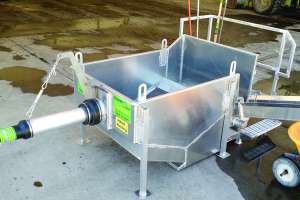
It’s aimed at homeowners with very hard water, which is common in the region.
“We install a water tank and an NSF-rated (National Sanitation Foundation) pump that delivers water right to a faucet,” he notes. “We charge by the gallon.”
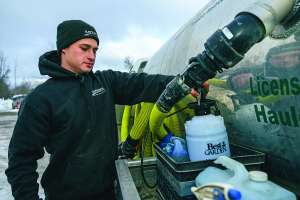
The business, which runs two old milk-delivery trucks with 2,800-gallon tanks, also provides potable water for special events held in areas with no water infrastructure and for temporary structures, such as job-site trailer officers, he says.
Knoper sensed a good business opportunity when he heard about new building codes in some Michigan municipalities that require temporary structures to provide potable water.
“And as municipalities become more and more engaged in establishing [water-related] building codes and ordinances, that potable water side is going to grow more and more,” he says. “It already has grown within the last year.
“You have to be aware of where trends are going,” Knoper advises. “Just because you’re on the waste side doesn’t mean there’s anything wrong with being on the water side. Both sides use the same kind of trucks, just with different tanks.”
Knoper says he’s always on the lookout for growth opportunities and would like to eventually expand into Indiana and Ohio.
“But if it’s not the right opportunity, we’re not going to push it,” he says. “I developed a business plan back in 2019 and 2020 and threw it in the garbage during my first week in business because the pandemic rendered it unworkable and unusable.
“We’re in an everchanging environment, so as opportunities arise, it’s best to take a look at each one and see how it fits with the personnel we have,” Knoper continues. “That’s how we acquired the potable water company — an opportunity arose and we thought it was a pretty good way to capitalize on an underserved need.”
Kerkstra Portable Restroom Services Inc., Hudsonville, Michigan
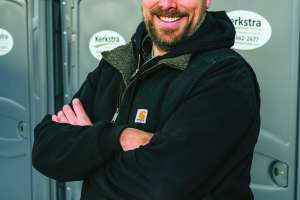
OWNER: Brian Knoper
FOUNDED: 1996
EMPLOYEES: 25
SERVICES: Restroom and restroom trailer rentals
SERVICE AREA: 75-mile radius around Hudsonville, Michigan
WEBSITE: www.kerkstraservices.com