
For five generations, Marc Phillips’ family lived in the Sierra Nevada mountains near Yosemite National Park in California. But times change, and in 2019 he sold the last bit of it and moved his family to northern Idaho where they now operate a horse and cattle ranch and a portable sanitation business.
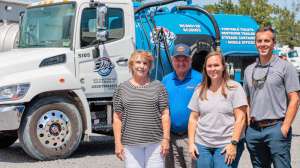
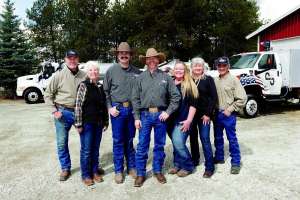
Marc and his son Hayden (23) are the owners of P&P Portable Sanitation, in Athol, Idaho. “P&P stands for Phillips & Phillips,” Marc explains. “We get people who laugh thinking it stands for other things.” Helping them out when needed are family friends Brad Post and Bruce Norris, both retired. Marc’s mother Loretta services restrooms and does billing. His wife Barbara does a little bit of everything. Norris’ wife Linda handles accounting. Post’s wife Sharon was a big help servicing restrooms in the first few years.
The company provides portable restroom rentals, septic pumping and RV servicing in a 50-mile radius of their Six Bar Six Ranch, which serves as headquarters. “We have a spot set aside where we keep our equipment,” Hayden says. “We keep the trucks inside of a shop. Our toilets are stored outside.”
Time for a change
Ranching goes way back in Marc’s family, starting with his great-grandfather who homesteaded just outside Yosemite in 1900. “He was one of the first high-country horse packers into the area and helped build a lot of the trails with the California Conservation Corps,” Marc says.
But, over time, pieces of the property were sold off and eventually a series of events caused the family to think about selling the rest and moving out of state — Marc’s father and grandmother passed away, his three older children were married and on their own, job opportunities were scarce in their small town for then-18-year-old son Hayden, and California politics was becoming increasingly frustrating.
In addition, Barbara was wanting to make some changes work-wise. And for 25 years, Marc had worked as a pastor. For the last eight years he and Barbara restarted a church, building it up from a handful of people to 300, but he felt he had done what he could there.
As they traveled with their church organization they checked places out. They had often passed through Idaho on their way to the Calgary Stampede in Canada every year. They loved the area and it soon became an obvious choice.

Help from a friend
After moving to Athol, the family considered several small-business ideas. “We were looking at doing an equipment rental yard, everything from wedding tents to tractors,” Marc says. “I called my friend in California who was doing portable restrooms and asked if he thought a half-dozen of those would be beneficial.”
The friend, Bill Verley, owner of Mariposa Portable Sanitation in Mariposa, California, happened to be in a position where he had to get rid of two vacuum trucks due to tightening California EPA regulations. He offered them to Marc. They struck a deal — basically a handshake agreement to pay them off over time — and suddenly Marc and Hayden had a new business plan. “It wasn’t what we were thinking we were going to do,” Marc says. “But we just landed with it and hit the ground running.”
The startup process wasn’t difficult. Verley bought them their first 24 portable restrooms. Marc had occasionally helped Verley so he knew how to drive the trucks. They took care of legal requirements. “We went through the health department for licensing and DOT to make sure the trucks were all good to run up here,” Hayden says. They contacted contractors associations, did some advertising, and before long were getting business by word of mouth.
Verley was a huge help to them throughout the process. “We wouldn’t be here without him,” Marc says. “He’s a great friend to the family and like a brother to me.”
Equipment inventory
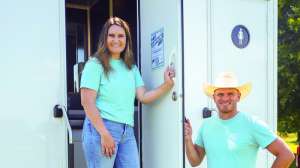
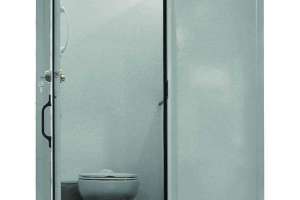
The company’s equipment is from PolyJohn. They now have 300 standard portable restrooms, most with hand-wash sinks inside. “That was something that was different from anybody else,” Marc says. “And when COVID hit, it was very attractive. People like it and now we have a reputation for it.”
Twelve units are ADA-compliant. Five are trailered, used primarily by the highway department and road construction contractors.
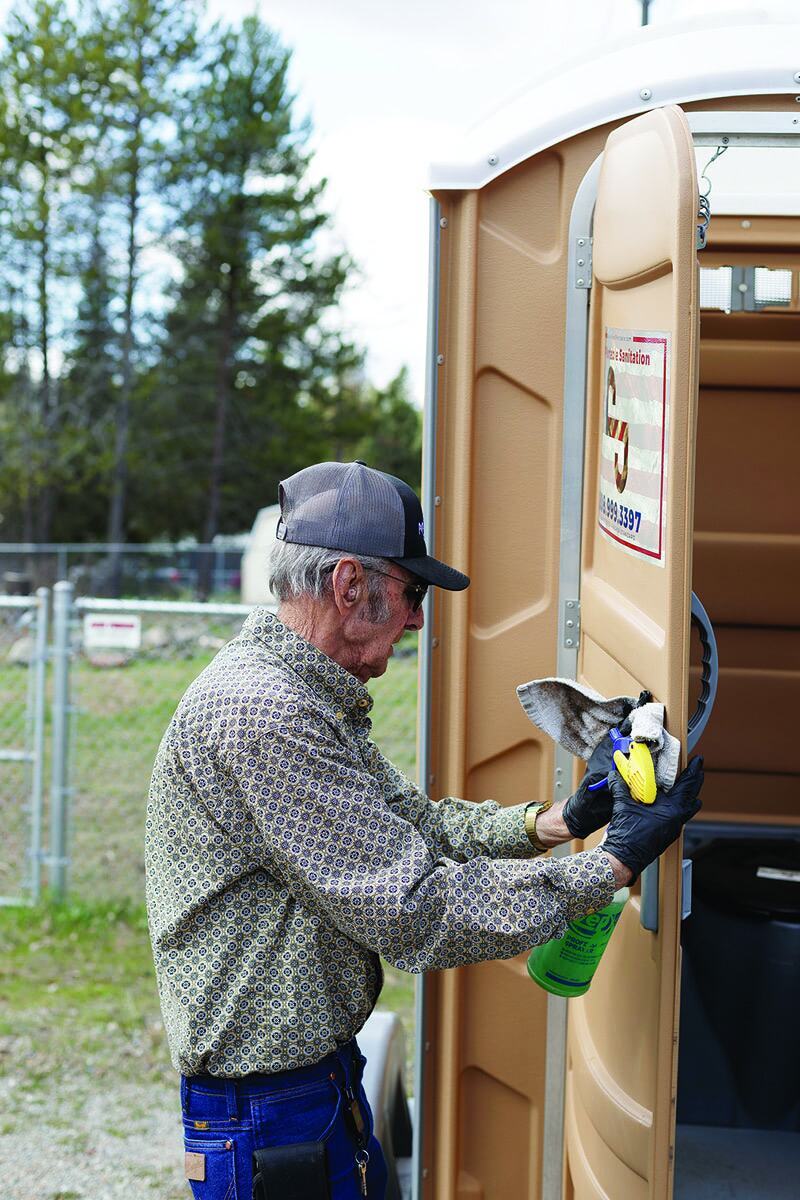
Units are tan with white tops. “It’s woodsy and rural,” Marc explains. “We wanted it to blend in, to look natural.” He also wanted a uniform look rather than a variety of colors.
Other equipment includes 25 double hand-wash stations and 15 300-gallon holding tanks. The company gets a fair amount of calls for luxury restroom trailers and will look at buying one after paying down some of their debt.

The service fleet
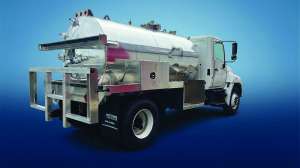
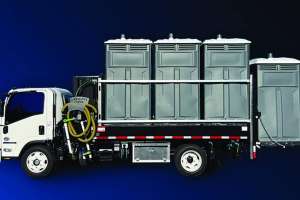
The company has four vacuum trucks. The 2005 Isuzu NPR from FMI Truck Sales & Service has a 700-gallon waste/300-gallon freshwater steel tank and Masport pump. “It’s the WorkMate model,” Marc says. “It has a hydraulic liftgate on the back and can carry four standard units or one ADA.”
The 2006 GMC Kodiak 5500 from FMI has a 500-gallon waste/300-gallon freshwater steel tank and Masport pump. “It’s the same setup as the Isuzu, which we’ve really grown to like as far as its workability and working off the side,” Marc says. “We also like it in the snow because it’s got four-wheel drive.”
The 2014 Ram 5500 from FlowMark with a 1,100-gallon waste/400-gallon freshwater aluminum tank and Masport pump has a manual gate and can carry two units.
The 2006 Peterbilt 335 from KeeVac Industries is their septic truck but is also set up for pumping portable restrooms and RVs. It has a 2,200-gallon waste/300-gallon freshwater aluminum tank and Masport pump.
For backup, the company has a KeeVac 300-gallon slide-in unit with a Masport pump and Honda motor. They plan to buy a 12-unit transport trailer but currently use utility trailers from their ranch (Big Tex Trailers) for transporting equipment.

Adding a service line
The company started pumping commercial and residential septic tanks a few years after starting their company. But they’re taking their time building up the business.
“There are a lot of septic companies here,” Marc says. “We didn’t come in to steal anybody’s business so we haven’t made a big push. We’re just trying to be neighborly. But we’re getting more work now because we’ve been doing it long enough.” Septic currently accounts for about 15% of their business but they hope to see that grow.
Marc reports they do not usually have problems finding the tanks since most have risers because of the permafrost in the area.
The company eventually bought a tanker truck from Verley, a 1990 Peterbilt 378 three-axle semi truck trailer with a 5,460-gallon tank from Dragon Products, enabling them to do large commercial septic systems. It’s also used for storage of waste before taking it 50 miles to the nearest treatment plant, something they did once or twice a day before they had the tanker. Now it’s usually once a week.
A variety of projects
Northern Idaho has seen a lot of growth in recent years so construction accounts for the bulk of the company’s revenue. In addition to residential work, the company connected with several large commercial contractors in the area and have worked on projects that included churches, mini storage units and hospitals.
In summer, events are about 40% of their business, dropping to 15% in their harsh winters. These include weddings, concerts, festivals and weekly farmers’ markets.
Several weekends a year the company provides equipment for 5,000 people attending Arenacross, a form of motocross. They worked with the casino golf course when they hosted the PGA tour for three years. “And there are places that do roping events and need units for a weekend,” Hayden adds. “And we’ve done work for lumber mills when they’re adding on to their infrastructure or have extra hands during the summer.”
The company provides units for a church camp every year. When camp-goers started decorating them, it soon became a fun annual competitive event between the different cabins.
The company also services RVs. They’re only 80 miles from the Canadian border and there are a lot of travelers going back and forth. They also service 300-gallon portable tanks for people living in RVs while they build a house.

A satisfying career
One thing Marc likes about the business is having happy customers. “They appreciate our service because we try to be over the top and they know the units are going to be clean,” he says. He also loves being self-employed. “I work by a compass, not a clock. If it needs to be done, we do it. And it gives us freedom to do our livestock.”
Hayden adds that he likes helping people having a hard time. “We’ve got some people on fixed incomes who have a personal restroom on their property,” he says. “When they say they’re not going to be able to have it serviced this month, we service it anyway just to make sure they’re taken care of. And if somebody’s having a memorial service, we donate units. I like being able to use this as our ministry to bless people when we can.”
Marc is very happy with the move the family made. “We came here to start something different and launch our son, and it’s been a great experience,” he says.
Continue reading for free