Question: With winter approaching, we would like to organize our yard and our operations for the impending cold season. What suggestions and tips do you have to share?
Answer: Our industry is seasonal, and proactively preparing for the next upcoming season helps you continue to operate the business smoothly and efficiently.
Every PRO’s yard, equipment types and quantities vary. Combine that with various geographic locations and it is safe to say that winter conditions are unique for your company. Given this fact, we do have quite a few suggestions for preparing for winter that you can use and adapt as needed.
Wind chill makes cold weather even colder. Many of our tips have to do with cutting down the wind factor and therefore dealing with cold temperatures only. We address your equipment, your yard, your storage areas and your office.
EQUIPMENT
Units as windbreaks
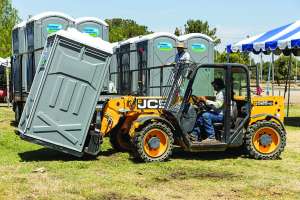
Portable restrooms aligned together in rows or groupings can provide effective windbreaks during winter months. While continuing to maintain your units organized into special event and construction areas, consider creating walls and spaces where trucks, restroom trailers and other equipment can be protected from the wind. Placing units together so doors cannot be blown open also keeps units protected. Units positioned in lines to serve as barriers are a major strategy for winter protection.
ADA and handicapped-accessible units for storage of sinks and sink stations
Keeping sinks from filling with rainwater — and snow, if applicable — is important. We recommend storing similar pieces of equipment together for better organization. For example, store all similar sinks in one row of ADA units and store sink stations in another row of ADA units. Position doors so the wind cannot blow them open, but you can easily open them to remove stowed equipment as needed.
Protecting restroom trailers
Ensure all trailers are pumped free of sludge and that all water tanks and reservoirs are empty. Make sure any vents are closed and follow manufacturer recommended winterization procedures.
Once again, use lines of restrooms to shield these pieces of equipment. Leave space so that the trailer doors can be opened, and the trailer can be checked and inspected during the winter if needed.
Protecting the underside of a restroom trailer from excessively cold temperatures is also important. The storage of other unused equipment to help block off the underside of the trailer is an excellent solution to this dilemma. Slide unused holding tanks under or against the bottom of the trailer to seal off this area. Unused holding tanks are lightweight and can easily be maneuvered as needed. This is easier than moving a line of units surrounding the trailer.
If your company rents trash cans for special events, the cans can be turned upside down and slid between the restroom trailer and a line of units to seal the area under the trailer. Empty trash cans can also be easily moved as needed.
To have a higher “wall of units” around the taller restroom trailer, consider positioning a fully loaded restroom transport trailer next to the restroom trailer.
Service trucks
Create a parking area where vehicles can pull in cab-first against walls of restrooms. Rows of restrooms can also be positioned behind the truck if needed due to extreme weather conditions.
If trucks can be parked in a warehouse or shed area, pull in for better protection of the engine. Keep the truck’s engine as far away from exterior doors as possible.
If parked outside, pickup trucks or flatbeds with slide-in tanks should be empty of freshwater and parked between rows of restrooms if possible.
Transport trailers
Always keep trailers filled with units and positioned against another row of restrooms to create a taller windbreak.
Once a route truck pulls into an area and is surrounded by walls of units on three sides, use a pickup truck or similar vehicle to pull restroom transport trailers to “close the door” on this area, leaving the truck completely protected from the wind.
You can also fill the transport trailers with ADA units — which can also be filled with sink stations — to “close the door” in areas around trucks parked outside.
STRATEGIES ON YOUR PROPERTY
Company yard
Water is a necessity in our industry and water lines and water spigots need to be protected in the winter months. Consider frost-free water spigots and heavily insulate exposed waterlines. Water spigots attached to a warehouse or building should be covered with insulated caps when not in use.
For areas of the yard where an awning is supported by poles, consider surrounding as many sides of the structure as possible with walls of restrooms.
An often-overlooked requirement is to inspect all lighting as shorter days will require more light usage.
Storage areas (warehouse or storage shed)
For pulldown garage doors, consider using rolled bags or tarps filled with a small quantity of sand to better seal gaps between the bottom of the door and the floor. Toilet paper boxes can be stacked along the outside walls for added insulation.
If a liquid deodorizer dispenser container must be moved indoors during cold weather, use an open plastic box to contain spills. A small children’s plastic swimming pool is an option. In a similar fashion, oils, cleaners and other liquids can be stored in clear plastic totes or storage boxes with covers to avoid spills and add more protection from cold temperatures.
If portable heaters will be used in this space, inspect units prior to use. Also, ensure there are fire extinguishers nearby.
Office area
Check the heating system and change air filters using a local professional if needed.
As in the warehouse area, inspect portable heaters that may be used and check the nearby fire extinguishers to make sure that they are in working order.
Check all the windows and exterior doors to make sure that they are completely sealed when closed. Add additional sealing material if air or light is evident when closed.
Winter wear
Winter hats and gloves are necessary for personnel in most parts of the country during winter months. Ensure that all employees have this equipment, especially new employees who were hired in the spring or summer.
Meet and review
Discuss company processes and procedures for the upcoming winter season. Under what weather conditions could the office be closed and/or routes suspended? What are the company service procedures for the winter months? Make sure emergency contact numbers are current and listed for all employees. Review the winterization protection procedures — some of which have been discussed above and ask for additional suggestions.
FINAL THOUGHTS
As PROs we always proactively prepare for the next season. Consider these tips and modify them as needed based on your geographical location, the specifics of your yard, and the types of equipment in your inventory. You may also want to stock up on coffee and hot chocolate!
Continue reading for free